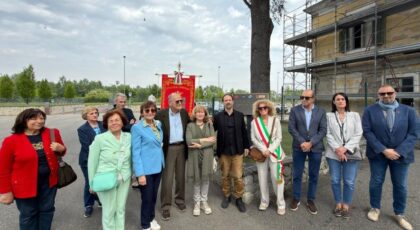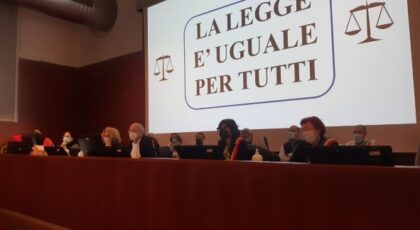

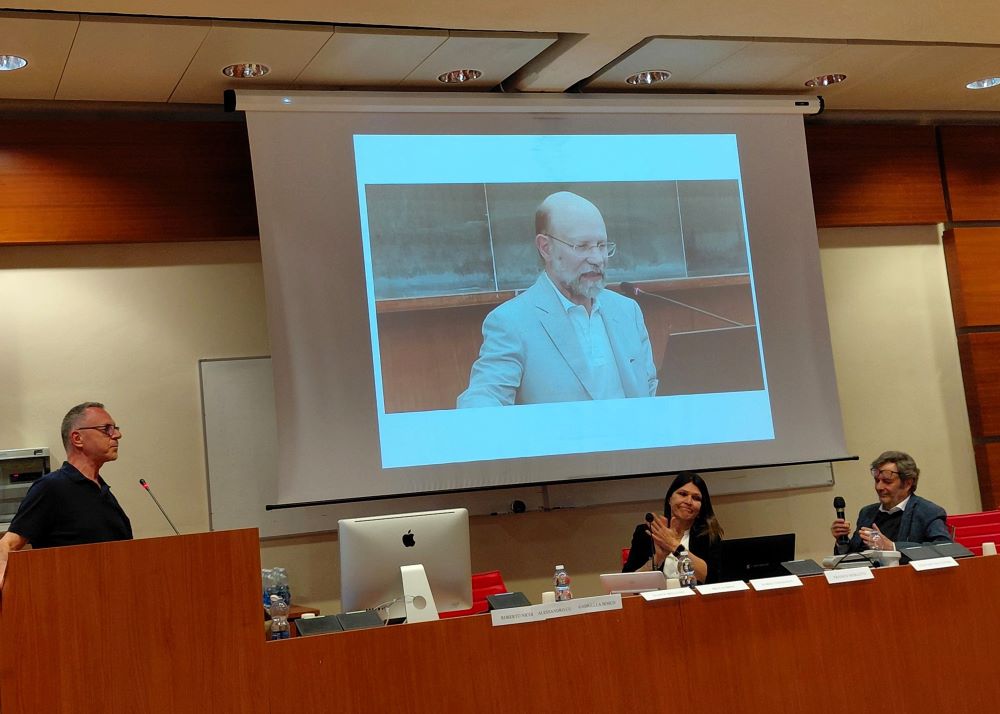
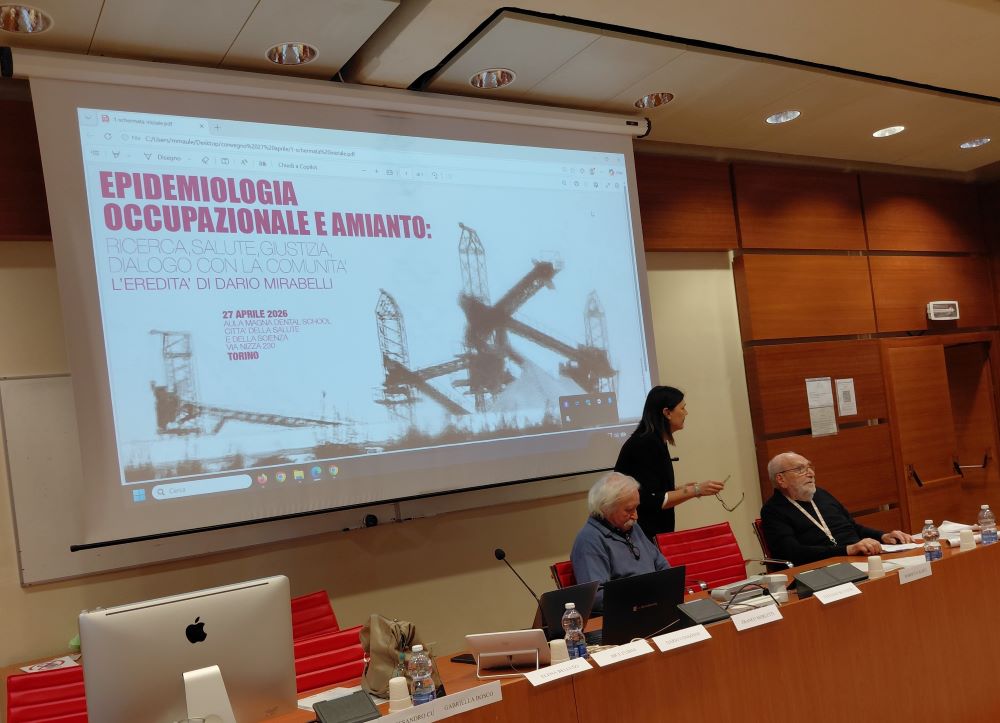
Il convegno, che si è svolto nell’aula magna della Dental School di Torino, martedì 27 aprile, a poco più di un anno dalla morte del dottor Dario Mirabelli, epidemiologo di fama internazionale, ha riunito la comunità scientifica e civile per riflettere su un modello di ricerca scientifica, in particolare epidemiologica, riguardante l’ambiente e la salute, che non si limita alla statistica, ma diventa strumento di attenzione e di tutela dei lavoratori e delle persone.
Il «modello Mirabelli»
È questo il metodo che ha interpretato Dario Mirabelli. C’è chi lo ha definito il «modello Mirabelli».
Morto il 7 febbraio 2025, è stato una figura di spicco nel Centro di Riferimento per l’Epidemiologia e la Prevenzione Oncologica in Piemonte (Cpo), responsabile del Registro Mesoteliomi piemontese, consulente per le procure in processi per reati ambientali, in modo particolare per le morti di amianto.
In apertura del convegno, lo ha ricordato con affetto e rimpianto il professor Benedetto Terracini, tra i fondatori dell’epidemiologia italiana e primo coordinatore del Cpo Piemonte: «Dario è stato mio allievo, ma da anni il nostro rapporto si era ribaltato: lui era diventato l’insegnante e io l’allievo. Ho imparato infinite cose da Dario. Aveva una grandissima attenzione per chi si ammala, per le bonifiche, per la ricerca di una cura e per la giustizia. Ne ricordo la perspicacia e l’insofferenza nei confronti della scienza al servizio degli interessi dei produttori».
Sulla sua intelligenza acuta, fuori dal comune, avevano posto l’accento, alla cerimonia di commiato nel febbraio dello scorso anno, alcuni ex compagni di liceo, ricordando l’appellativo con cui veniva soprannominato con un’alterazione del cognome: «Mirabilia».
Il convegno a Torino
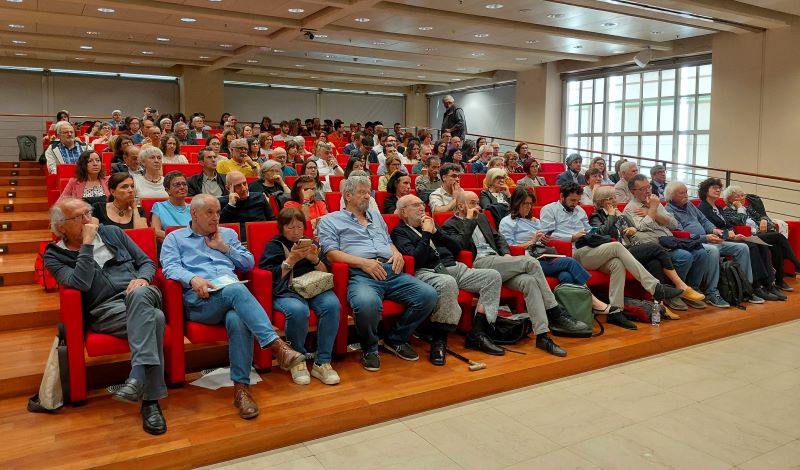
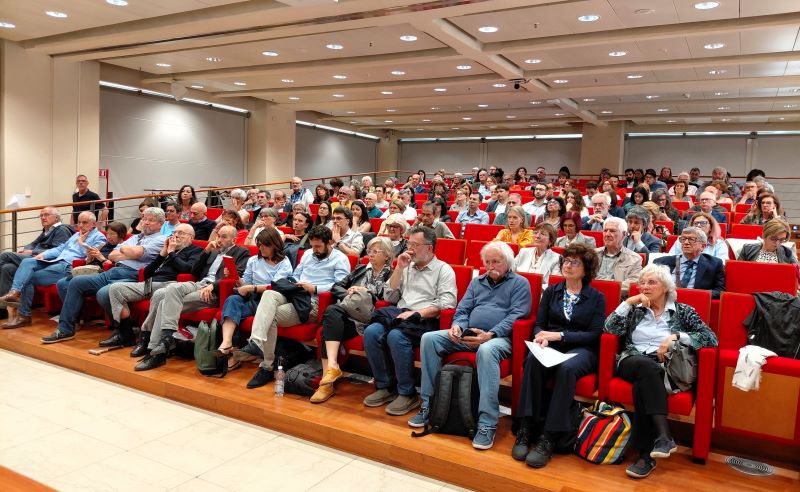
Al convegno del 27 aprile, incentrato su «Epidemiologia occupazionale e amianto: ricerca, salute, giustizia e dialogo con la comunità», un folto gruppo di scienziati, giuristi, colleghi e amici ha richiamato molti ricordi da cui è emerso un giudizio unanime sullo stile Mirabelli: gentile (Bice Fubini, già direttrice del Centro Scansetti, lo ha definito «un campione indiscutibile di gentilezza e amico sincero, attento ai dati epidemiologici non disgiunti dalla conoscenza dei dati storici»), fortissimo motivatore (Roberto Calisti: «Cercava la verità come strumento di giustizia»), presente e leale (Franco Merletti ha citato Epicuro: «”La fiducia nell’aiuto di un amico è più importante dell’amico stesso”: sai che quella persona c’è sempre, così era Dario»), intelligente e meticoloso (Elisabetta Chellini ha fatto riferimento ai «questionari scrupolosi e accurati che Dario predisponeva per le indagini epidemiologiche»), dotato di «grande correttezza metodologica – ha sottolineato Irma Dianzani -, non ha mai fatto pesare il suo immenso sapere», un «Maestro dotato di grande fermezza» per Carolina Mensi, responsabile Renam della Lombardia. I tecnici del Servizio di Prevenzione e Sicurezza Ambienti di Lavoro, Roberto Nicola, Alessandro Curati e Gabriella Bosco, operatori dello Spresal dove Dario ha lavorato prima di trasferirsi al CPO più di venti anni fa, hanno raccontato come il «metodo Dario» sia ancora vivo oggi.
Lo scienziato intelligente e gentile
Uno scienziato intelligente, gentile, rigoroso, preparato e determinato, e, quindi, anche scomodo per le controparti (in un caso – il processo Montefibre -, la difesa degli imputati chiese addirittura la sua ricusazione, ha ricordato il giornalista scrittore Alberto Gaino).
È emerso nei numerosi interventi che si sono avvicendati durante la giornata scientifico-commemorativa quanto sia stato fondamentale il contributo tecnico di Mirabelli per la comprensione dei rischi dovuti all’esposizione all’amianto, non soltanto nei luoghi di lavoro, ma anche nell’ambiente esterno ai centri produttivi ed estrattivi del minerale. Molti e fondamentali, anche nelle aule di giustizia (in particolare modo nei processi per le vittime dell’Eternit), gli studi condotti da Mirabelli insieme al collega e amico Corrado Magnani (entrambi allievi di Terracini che li ha accomunati affettuosamente con l’appellativo «i ragazzi»). Gli studi condotti in collaborazione con la genetista Irma Dianzani hanno ridimensionato il ruolo della “suscettibilità individuale” nella cancerogenesi da amianto, spesso artatamente enfatizzato nelle aule dei tribunali dalla difesa e dai suoi consulenti.
Il rigore scientifico
È stato evidenziato il rigore scientifico a cui Mirabelli non derogava; ha sviluppato questionari meticolosi e pionieristici per indagare le pregresse esposizioni alla fibra più difficili da rintracciare e si è dedicato sempre alla ricerca mai partendo da posizioni apodittiche. Lo ha dimostrato in molti gruppi di lavoro e in molti lavori di ricerca. Magnani (lo scienziato che ha pubblicato il maggior numero di studi epidemiologici al mondo sull’impatto da amianto, seguito, a poca distanza, da Mirabelli) ha ricordato, in particolare, lo studio che avevano condiviso sulla cava di Balangero, dimostrando la pericolosità dell’amianto crisotilo, cosi smentendo le affermazioni sostenute dagli scienziati al servizio dell’industria lungo i decenni. Dario Consonni, epidemiologo della Clinica del Lavoro di Milano, ha poi posto l’accento all’importanza della dimostrazione che l’amianto non soltanto causa mesotelioma, ma ne anticipa la comparsa, tema rilevante in tribunale per definire i nessi di causalità, come sostenuto da Dario Mirabelli e Corrado Magnani, spesso osteggiati dai periti delle difese, impegnati a demolire questo risultato scientifico.
I primi Registri dei Mesoteliomi
Stefano Silvestri, igienista industriale già responsabile della caratterizzazione delle esposizioni ad amianto dell’Ispo (Istituto per lo Studio e la Prevenzione Oncologica) di Firenze, ha ricordato il ruolo pionieristico e fondamentale di Mirabelli nell’attuazione del Registro Nazionale dei Mesoteliomi, quando i Registri Regionali in Italia erano solo due, quello toscano e quello piemontese. «Stavamo ore e ore a discutere al telefono… ci venivano le orecchie rosse…, e non eravamo sempre d’accordo, c’era dibattito tra noi, ma non fummo mai divergenti». Silvestri ha affrontato la questione della attuale persistenza di materiali contenenti amianto in Italia: 22 milioni di tonnellate di solo cemento-amianto ancora presenti sul territorio nazionale, sottolineando l’inadeguatezza di “censimenti” effettuati con satelliti e droni, «ma molto più amianto è nascosto e non visibile». A suo parere, per stanarlo e per accelerare le bonifiche, servono più incentivi e discariche a chilometri zero. Silvestri ha poi lamentato che nel nostro Paese la bonifica e la sorveglianza dei siti inquinati è sempre più affidata ai privati e sempre meno alla responsabilità pubblica, che tende a finanziare, appunto, i privati.
Si fanno i controlli?
A proposito di sorveglianza e controlli, il dottor Raffaele Guariniello, storico pubblico ministero piemontese, promotore di numerose eco-inchieste (con il team dei pm Sara Panelli e Gianfranco Colace aveva incardinato il Maxiprocesso Eternit per disastro ambientale), ha segnalato che, pur essendo vietato l’amianto, il rischio di esposizione è ancora molto presente nei cantieri, dove, ad esempio, nelle opere di demolizione, si maneggiano vecchi manufatti di amianto. «Ma – ha domandato a voce alta – abbiamo in Italia organi giudiziari che facciano controlli e siano in grado di far rispettare le regole che ci sono? O devo continuare a insistere perché si istituisca una procura nazionale della sicurezza che coordini la prevenzione in tutto il Paese?». E questo per quanto riguarda l’Italia, ma, ha messo in guardia Guariniello aprendo lo sguardo all’Europa, «la futura ricostruzione dell’Ucraina comporterà gravi rischi di esposizione all’amianto».
Scienza e giustizia
Il ruolo di Mirabelli è stato un riferimento nel rapporto tra scienza e giustizia. Magistrati e avvocati (ad esempio Sara Panelli, sostituto della procura generale di Torino, e Laura D’Amico, avvocata, patrocinatrice di molte parti civili in processi ambientali, specialmente nei casi Eternit) hanno testimoniato il rigore e la pazienza dell’epidemiologo nel tradurre concetti scientifici complessi in un linguaggio comprensibile e quindi essenziale e utilizzabile nei processi penali.
Inoltre, è stata ripetutamente rimarcata l’onestà intellettuale di Mirabelli che ha sempre rifiutato i cospicui compensi della «scienza milionaria padronale», ha detto Rosalba Altopiedi, ricercatrice del Dipartimento di Giurisprudenza dell’Università del Piemonte Orientale, già consulente del Maxiprocesso Eternit; «Da Dario ho imparato a stare dalla parte giusta della storia».
Per Mirabelli la scelta della parte giusta era fondata sul binomio etica e scienza. E, con la gentilezza, la pazienza e il rigore che costituivano la sua cifra, in questo si è speso in molti processi.
Nesso di causalità. E per gli scafisti?
Luca Masera, professore titolare di Diritto Penale all’università di Brescia, ha evidenziato «la difficoltà dei magistrati di confrontarsi con la scienza, specie quando la scienza ha alle spalle interessi economici forti». Si è soffermato, in modo particolare, sul cosiddetto «nesso di causalità» che «è il punto dolente nei processi di amianto. L’epidemiologia introduce il concetto di danno alla popolazione, che è una nozione nuova per il giudice, abituato a ragionare in termini di danno individuale. Come fare emergere il danno alla popolazione?». L’individuazione univoca di ciascuna delle vittime «è un postulato enfatizzato in questi tipi di processi – ha spiegato il professor Masera -, mentre, vedi un po’ e chissà perché, non lo si enfatizza affatto quando l’imputato è lo scafista che ha trasportato su una carretta decine di persone naufragate e morte!» Tra i giuristi, «se si parla di epidemiologia e statistica, si crede di parlare di qualcosa di non certo – ha concluso Masera -: non è così, bisogna fare uno sforzo culturale». Al servizio di questo obbiettivo si è sempre reso disponibile Mirabelli.
Profonda umanità
E il convegno, ha rilevato Enrica Migliore nelle conclusioni, non è stato solo un’occasione di approfondimento scientifico, ma anche una riflessione sull’eredità grande che ha lasciato Dario Mirabelli, dimostrando una profonda umanità e vicinanza alle vittime di quella che Enzo Ferrara, ricercatore dell’Istituto Nazionale Ricerca Metrologica, ha definito «una violenza lenta».
Lo scienziato gentile e attento alle persone, si è preso a cuore la sofferenza e l’ingiustizia patita dalla collettività casalese, strattonata ma non piegata dalla tragedia dell’amianto. Lo hanno ricordato esponenti dell’Afeva di Casale Monferrato e dell’Aica di Savigliano.
La gratitudine di Casale e Savigliano
Bruno Pesce, esponente storico dell’Afeva, ha espresso gratitudine per l’enorme lavoro di Mirabelli, e di altri scienziati come Terracini e Magnani, oltre che dei magistrati e degli avvocati.
Assunta Prato, insegnante, vedova dell’amianto, fortemente impegnata a sensibilizzare le nuove generazioni su rischi dell’amianto e su tutte le insidie ambientali, ha ribadito: «La storia di Casale è stata una storia corale. Dario era parte preponderante in questa coralità, con una professionalità eccezionale; ha saputo scegliere da che parte stare, senza lasciarsi corrompere da lauti compensi: il suo esempio ha un valore educativo immenso per i ragazzi, che hanno il compito di continuare questa battaglia di civiltà».
Preponderante anche a Savigliano il ruolo di Mirabelli evocato con commozione da Armando Vanotto, presidente dell’Associazione Italiana Contro l’Amianto, portavoce della battaglia per le vittime d’amianto dell’ex Fiat Ferroviaria (oggi Alstom): dal 1992 sono oltre 150 gli ex dipendenti deceduti.
Nicola Pondrano, casalese dell’Afeva, che è stato il primo presidente del Fondo nazionale Inail per le vittime di amianto, ha commentato: «Parliamo di una tragedia immane, in cui abbiamo trovato il sostegno scientifico di scienziati come Benedetto Terracini, Corrado Magnani e Dario Mirabelli. Ora, – ha proseguito – dobbiamo avere il coraggio di chiamare in causa lo Stato: manca un sistema di protezione sociale per le vittime dell’amianto, specialmente per quelle cosiddette ambientali, cioè non professionali». E a proposito del ruolo dello Stato, Pondrano ha puntato il dito contro «lo scandalo dei soldi dati dallo Stato stesso a Fincantieri (la cui maggioranza delle azioni è in mano pubblica ed è controllata dal Ministero, ndr) per sostenere la società nelle cause processuali per malattie professionali che perderà. Questa decisione va assolutamente bloccata. Dobbiamo pensare a un presidio davanti al Ministero del Lavoro. Ecco, siamo di nuovo in mobilitazione. E lo facciamo ricordando Dario Mirabelli».
Ringraziamento dal Texas
Un ringraziamento a Dario Mirabelli è arrivato anche da Houston Texas, in particolare dall’avvocato Gary di Muzio, patrocinatore delle vittime dell’amianto in diverse cause in Texas. «Si era avvalso di Dario – ha ricordato Terracini – per avere pareri scientifici e notizie riguardanti l’amianto in Italia. Il suo messaggio sarà postato sul sito del Cpo della Regione Piemonte». Questa la frase conclusiva della lettera: «Il lavoro instancabile e l’eredità del dottor Mirabelli hanno reso possibile evitare in futuro diffuse sofferenze umane e offrire una qualche forma di giustizia alle vittime dell’amianto e alle loro famiglie. Dario Mirabelli è stato davvero un gigante, e posso solo sperare che il suo esempio ispiri i futuri sostenitori della salute pubblica a perseguire gli stessi elevati obiettivi». [in fondo, traduzione integrale della lettera del professor Gary di Muzio, oltre al ricordo espresso da Barry Castleman].
Come onorare la memoria
«Uno dei modi di onorare la memoria di Dario Mirabelli è dare continuità al suo lavoro e al suo metodo di lavoro» ha esortato Silvestri, «insistendo nella ricerca epidemiologica nelle regioni in cui è ancora condotta in modo modesto» ha aggiunto Magnani, condividendo pensiero e proposta di Pietro Comba (presente al convegno), epidemiologo di fama internazionale, già responsabile del Dipartimento Ambiente e prevenzione primaria dell’Istituto Superiore di Sanità, cofondatore del progetto «Sentieri», un sistema di sorveglianza epidemiologica sulla salute delle popolazioni che risiedono nelle aree contaminate.
Alessandro Marinaccio, responsabile del laboratorio di Epidemiologia occupazionale e ambientale dell’Inail nazionale, ha citato Primo Levi, da «Covare il cobra», (1986): «Ciò che farai quando eserciterai la professione può essere utile per il genere umano, o neutro, o nocivo. Cerca di conoscere il fine a cui il tuo lavoro è diretto. Non nasconderti dietro l’ipocrisia della scienza neutrale: sei abbastanza intelligente per poter valutare se dall’uovo che stai covando sguscerà una colomba, un cobra, una chimera o magari nulla». Marinaccio ha concluso: «Penso che queste parole sarebbero piaciute a Dario».
Non a caso, l’ultima sessione della giornata – dedicata al dialogo con la comunità – è stata moderata da Carol Brentisci, del Cpo, storica collaboratrice del Registro Mesoteliomi Piemonte e delle indagini di popolazione a Casale. Ha ricordato la capacità di Dario di creare una empatia con le vittime di Casale e con i loro congiunti.
Infinita riconoscenza
Chi scrive ha avuto il privilegio di dire le ultime parole prima della chiusura della giornata: “A Dario Mirabelli, noi – che stiamo qui e che «vogliamo vivere qui, in questa città amata, martoriata, avvelenata, risorta e mai piegata, bonificata, la più bonificata del pianeta, ma non ancora del tutto, in questa città fiera, ebbra di speranza e, spero, pacificata nel cuore, ecco noi casalesi, e non solo, siamo infinitamente riconoscenti.
Relatori e moderatori
Al convegno su «Epidemiologia occupazionale e amianto: ricerca, salute, giustizia e dialogo con la comunità» sono intervenuti:
Introduzione: Benedetto Terracini
Sessione 1
«Epidemiologia occupazionale: strumento di conoscenza e tutela della salute dei lavoratori», moderatore Franco Merletti, relatori: Roberto Calisti, Roberto Nicola, Alessandro Curati, Gabriella Bosco, Stefano Silvestri, Bice Fubini, Elena Belluso, Dario Consonni;
Sessione 2
«Attività di ricerca: conoscenze consolidate e sfide attuali»: moderatore Enrica Migliore, relatori: Corrado Magnani, Alessandro Marinaccio, Elisabetta Chellini, Irma Dianzani;
Sessione 3
«Quando la scienza incontra la giustizia: conoscenza, responsabilità e diritti», moderatore Enzo Ferrara, relatori: Raffaele Guariniello, Alberto Gaino, Laura D’Amico, Rosalba Altopiedi e Luca Masera;
Sessione 4
«Il dialogo con la comunità e con le Associazioni Vittime dell’Amianto», moderatore Carol Brentisci, relatori: Nicola Pondrano, Armando Vanotto, Assunta Prato, Silvana Mossano.
TRANSLATION by VICTORIA FRANZINETTI
CONFERENCE HONOURING THE MEMORY of Dr DARIO MIRABELLI
Turin, April the 27th 2026
By
Silvana MOSSANO
The conference in honour of Dr Mirabelli took place in the main lecture theatre of the Turin University Dental School on Tuesday 27 April, just over a year after the death of Dr Dario Mirabelli, an internationally renowned epidemiologist. Dario brought together the scientific and the wider community to reflect on a model of scientific research – particularly epidemiological research – concerning the environment and health. He did not see it as being limited to statistics but as a tool to focus on and protect both workers and members of the community.
This is the approach Dario Mirabelli developed and some call it the ‘Mirabelli model’.
Dario passed away on February the 7th 2025 and was a leading figure of the Centro di Riferimento per l’Epidemiologia e la Prevenzione Oncologica in Piemonte (the Piedmont Centre of Reference for Epidemiology and Cancer Prevention – CPO), Head of the Piedmont Mesothelioma Register, as well as working as a Prosecutor’s expert witness in trials on environmental crimes, particularly asbestos-related ones.
At the opening of the conference, Professor Benedetto Terracini, one of the founders of Italian epidemiology and the first coordinator of the CPO Piedmont, warmly remembered him and expressed his sadness: ‘Dario was my student, but for years now our relationship had changed: he had become the teacher and I was the student. I learnt so much from Dario. He was always concerned for those who fell ill, promoted decontamination, promoted research into a treatment and pursued justice. I remember his insights and how he did not tolerate science serving company and industry interests”.
At the memorial last February, some of his former high school classmates highlighted his sharp, extraordinary intelligence, recalling the nickname he was given—a pun on his surname: “Mirabilia” (wonders) instead of Mirabelli.
The April the 27th conference focussed ‘Occupational epidemiology and asbestos: research, health, justice and dialogue with the community’ (Epidemiologia occupazionale e amianto: ricerca, salute, giustizia e dialogo con la comunità»), there was a large presence of scientists, lawyers, colleagues and friends who recalled many events and facts: all outlined what a wonderful person he was: kind
- Prof Bice Fubini, former director of the Scansetti Centre, described him as “an indisputable paragon of kindness and a sincere friend, focussed on epidemiological data with the knowledge of historical series”),
- Prof Roberto Calisti said he was a powerful motivator saying: ‘He sought the truth as an instrument of justice’,
- Prof Franco Merletti quoted Epicurus: ‘“Trust in a friend’s help is more important than the friend himself”: you know that person is always there; that was Dario’),
- Elisabetta Chiellini referred to him intelligent and meticulous ‘scrupulous and accurate questionnaires that Dario prepared for epidemiological investigations’), endowed with ‘great methodological rigour’ –
- Prof Irma Dianzani emphasised – ‘he never made his immense knowledge a big deal,
- Dr Carolina Mensi Renam (Mesothelioma Registry) Head of the Lombardy Regional Registry described him as a ‘steadfast Master
- The staff of the Workplace Prevention and Safety Service (Servizio di Prevenzione e Sicurezza Ambienti di Lavoro) Roberto Nicola, Alessandro Curati and Gabriella Bosco – the Spresal (Health and safety Agency) staff members where Dario worked before moving to the CPO more than twenty years ago – described how ‘Dario’s method’ is still being used to date.
An intelligent, kind, rigorous, knowledgeable and determined scientist, and, as such, also a thorn in the side of the defendants: in one case – the Montefibre trial – the defence even objected to him as an expert witness, as Alberto Gaino journalist and writer remembered).
Many contributions that day highlighted just how important Mirabelli’s technical contribution had been in developing an understanding the risks associated with asbestos exposure, not only in the workplace but also in the environment outside mining and manufacturing areas. Mirabelli conducted many key studies with his colleague and friend Corrado Magnani (both students of Terracini’s, who affectionately referred to them collectively as ‘the boys’) which were used in trials especially those concerning the Eternit plant. The studies were carried out with the geneticist Prof Irma Dianzani: they highlighted and put into perspective the role of ‘individual susceptibility’ in asbestos-related carcinogenesis, a factor often artificially used by the defence and its consultants.
Mirabelli’s unwavering scientific rigour was repeatedly mentioned; he developed meticulous and pioneering questionnaires to investigate past exposures to the fibre that were most difficult to trace, and he always approached a case as a scientific investigation without ever starting from dogmatic positions. He demonstrated this in many working groups and in numerous research projects. As an example, Professor Magnani (the scientist who has published the greatest number of epidemiological studies in the world on the impact of asbestos, followed, not far behind, by Mirabelli) recalled the study they had conducted together on the Balangero quarry, demonstrating the danger of chrysotile asbestos, thereby refuting the claims put forward by scientists working for the industry over the decades. Dr Dario Consonni, an epidemiologist at the Milan Occupational Medicine Clinic (Clinica del Lavoro di Milano), emphasised the importance of demonstrating that asbestos not only causes mesothelioma but further exposure also accelerates its onset – a key issue in court for establishing causal links, as argued by Dario Mirabelli and Corrado Magnani, who were often opposed by defence experts determined to undermine this scientific finding.
Dr Stefano Silvestri, an industrial hygienist formerly in charge of characterising asbestos exposure at ISPO (Istituto per lo Studio e la Prevenzione Oncologica -Institute for the Study and Prevention of Cancer) in Florence, recalled Mirabelli’s pioneering and fundamental role in establishing the National Mesothelioma Register, at a time when there were only two regional registers in Italy: the Tuscan and the Piedmontese ones.
“We spent hours and hours discussing things on the phone… our ears burning red by the end…, and we didn’t always agree; we debated, but we were never differed”. Silvestri addressed the issue of the current persistence of asbestos-containing materials in Italy: 22 million tonnes of asbestos cement alone still present across the country, highlighting the inadequacy of ‘surveys’ carried out using satellites and drones, ‘but much more asbestos is hidden and not visible’. In his view, to identify it and speed up remediation, more incentives and local disposal sites are needed. Silvestri then lamented that in our country, decontamination and monitoring of polluted sites is increasingly entrusted to private companies and has become less of a matter of public responsibility. The public sector tends to fund, precisely, the private sector.
On the subject of monitoring and inspections, Dr Raffaele Guariniello, a former and well known Piedmontese public prosecutor and the driving force behind numerous environmental investigations with the team of prosecutors led by Dr Sara Panelli and Dr Gianfranco Colace, initiated the Eternit Maxi-trial where the company was sued for environmental disaster in a criminal case. Dr Guariniello pointed out that, although asbestos is banned, the risk of exposure is still present in construction sites, where, for example, during demolition work, where old asbestos-containing materials are handled. “But – he asked aloud – are there judicial bodies (courts and agencies) in Italy able to monitor and enforce existing rules? Or should we insist on the establishment of a national health and safety prosecutor’s office to coordinate prevention across the country?”. Dr Guariniello warned, turning his gaze to Europe, “the future reconstruction of Ukraine will entail serious risks of asbestos exposure”.
Mirabelli’s role has been a benchmark in the relationship between science and justice. Magistrates and lawyers (such as Dr Sara Panelli, deputy Head Turin Prosecutor, and Dr Laura D’Amico, a lawyer representing many plaintiffs in environmental trials, particularly in the Eternit cases testified to the epidemiologist’s rigour and patience in translating complex scientific concepts into language that is understandable and therefore essential and usable in criminal trials.
Furthermore, Mirabelli’s intellectual honesty was repeatedly mentioned; he always refused the substantial fees offered by ‘millionaire corporate science’, said Dr Rosalba Altopiedi, a researcher at the Department of Law at the University of Eastern Piedmont and former consultant to the Eternit Maxi-trial; ‘Dario taught me to stand on the right side of history’ which for him was based on the combination of ethics and science. Thus the kindness, patience and rigour, his hallmarks, as he he devoted himself to this in many trials.
Prof Luca Masera, Professor of Criminal Law at the University of Brescia, highlighted “the difficulty magistrates face in engaging with science, especially when science is backed by powerful financial interests”. He focused on the so-called ‘causal link’, which ‘is the sticking point in asbestos trials. Epidemiology introduces the notion of harm to the population, which is a new notion for the criminal courts, accustomed to reasoning in terms of individual harm. How can harm to the community be understood?’ The unambiguous identification of each victim “is a principle emphasised in these types of trials,” explained Professor Masera, “whilst, oddly enough and for some reason, it is not emphasised at all when the defendant is the smuggler who transported dozens of shipwrecked and dead people on a rickety boat!” Among legal experts, “when we talk about epidemiology and statistics, we tend to think we’re talking about something uncertain,” he concluded, “but that’s not the case; we need to make a cultural effort.” Mirabelli always made himself available to serve this objective.
As Dr Enrica Migliore noted in her closing remarks, the conference was not merely an opportunity for scientific exploration, but also a reflection on the great legacy left by Dario Mirabelli, who demonstrated profound humanity and solidarity with the victims of what Dr Enzo Ferrara, a researcher at the National Institute of Metrology, described as ‘a slow violence’.
The gentle scientist, ever attentive to people, took to heart the suffering and injustice endured by the Casale community, shaken but not broken by the asbestos tragedy. Representatives from the victims’ association, Afeva in Casale Monferrato and Aica in Savigliano paid tribute to him.
Bruno Pesce of AFeVA expressed gratitude for the enormous work of Mirabelli, and of other scientists such as Terracini and Magnani, as well as the magistrates and lawyers.
Assunta Prato, a teacher and asbestos widow, who is deeply committed to raising awareness among the younger generations about the risks of asbestos and all environmental hazards, reiterated: “The history of Casale has been a collective one. Dario played a leading role in this collective effort, with exceptional professionalism; he knew which side to take, without allowing himself to be corrupted by lavish rewards: his example has immense educational value for young people, who have the task of continuing this battle for civilisation”.
Mirabelli’s role was also pivotal in Savigliano, as movingly recalled by Armando Vanotto, president of the Italian Association Against Asbestos (AIEA) and spokesperson for the campaign on behalf of the asbestos victims of the former Fiat Ferroviaria (now Alstom): since 1992, over 150 former employees have died.
Nicola Pondrano, a Casale native and member of AFeVA, who was the first president of the INAIL (Workers’ compensation Agency) National Fund for Asbestos Victims, commented: “We are talking about an immense tragedy, in which we have found scientific support from scientists such as Benedetto Terracini, Corrado Magnani and Dario Mirabelli. Now,” he continued, “we must have the courage to hold the State to account: there is no social protection system for asbestos victims, especially for so-called environmental victims, that is, non-occupational ones.” And on the subject of the state’s role, Pondrano pointed the finger at “the scandal of the money given by the state itself to Fincantieri (the majority of whose shares are publicly held and which is controlled by the Ministry, ed.) to support the company in the legal cases concerning occupational diseases that it will lose. This decision must be stopped at all costs. We must organise a protest outside the Ministry of Labour. So, we are mobilising once again. And we are doing so in memory of Dario Mirabelli”.
A message of thanks to Dario Mirabelli also arrived from Houston, Texas, specifically from lawyer Gary Di Muzio, who represents asbestos victims in various cases in Texas. “He had turned to Dario,” recalled Terracini, “gary’s message ”
“One way to honour the memory of Dario Mirabelli is to ensure the continuity of his work and his working methods,” urged Dr Silvestri, “by continuing epidemiological research in regions where it is still carried out on a modest scale,” added Magnani, echoing the thoughts and proposal of Dr Pietro Comba (present at the conference), an internationally renowned epidemiologist, former head of the Department of Environment and Primary Prevention at the Italian National Institute of Health (Dipartimento Ambiente e prevenzione primaria dell’Istituto Superiore di Sanità), and co-founder of the ‘Sentieri’ project, an epidemiological surveillance system monitoring the health of populations living in contaminated areas.
Dr Alessandro Marinaccio, head of the Occupational and Environmental Epidemiology Laboratory at the National INAIL, quoted Primo Levi from ‘Covare il cobra’ (1986): ‘What you do when practising your profession may be useful to humankind, or neutral, or harmful. Try to understand the purpose your work serves. Do not hide behind the hypocrisy of neutral science: you are intelligent enough to judge whether the egg you are hatching will produce a dove, a cobra, a chimera, or perhaps nothing at all’. Marinaccio concluded: ‘I think Dario would have liked these words’.
[life-long friends such as Vicky Franzinetti recalled the pride in their friendship which had started when all including his wife Dr Claudia Spezia and him had thought they would change the world and how he had continued]
The final session of the day – dedicated to dialogue with the community – was rightly moderated by Dr Carol Brentisci, of the CPO, a long-standing collaborator with the Piedmont Mesothelioma Registry and the population surveys in Casale. She recalled Dario’s empathy with the victims of Casale and their relatives.
Silnano Mossano (the person writing) had the privilege of speaking the final words before the day’s proceedings concluded: “To Dario Mirabelli, Just that: to live in my beloved martyred, poisoned, resurrected town that never yielded, decontaminated, the most decontaminated albeit not totally place on the planet. This proud town intoxicated by hope and – I hope – a town that has found peace … for you, with you with you… I want to heal. Then I can stop fighting, screaming, praying, crying because I shall at long last live. We shall at long last be able to live. We shall be saved; we shall save ourselves. All of us. Here and in every nook and cranny of our Planet.
Speakers and moderators
The following spoke at the conference on ‘Occupational epidemiology and asbestos: research, health, justice and dialogue with the community’:
Introduction: Benedetto Terracini
Session 1 ‘Occupational epidemiology: a tool for understanding and protecting workers’ health’, moderator Franco Merletti, speakers: Roberto Calisti, Roberto Nicola, Alessandro Curati, Gabriella Bosco, Stefano Silvestri, Bice Fubini, Elena Belluso, Dario Consonni;
Sessione 2 “Research activities: established knowledge and current challenges”: moderator Enrica Migliore, speakers: Corrado Magnani, Alessandro Marinaccio, Elisabetta Chellini, Irma Dianzani;
Sessione 3 “When science meets justice: knowledge, responsibility and rights”, moderator Enzo Ferrara, speakers: Raffaele Guariniello, Alberto Gaino, Laura D’Amico, Rosalba Altopiedi and Luca Masera;
Session 4 “Dialogue with the community and with Asbestos Victims’ Associations”, moderator Carol Brentisci, speakers: Nicola Pondrano, Armando Vanotto, Assunta Prato, Silvana Mossano.
The memory by Gary di Muzio
My knowledge of Dario Mirabelli’s story is a beautiful example of how a pure and noble scientist, quietly investigating phenomena in his own backyard, can expand scientific understanding, prevent future harm around the world, and bring some measure of justice to victims of past technological harm.
My perspective is that of a lawyer with a public health background, who was moving in the 1990s from predominantly solvent-type environmental cases to more occupational and dust-related illness cases, especially those caused by asbestos. Having litigated large “Superfund”-type toxic tort cases in the United States for several years against multi-national companies, I did not consider myself naïve in terms of industry arguments against liability and causation; but that experience in no way prepared me for the universe of well-funded disinformation I and activists and claimants around the world, have to combat in attempting to prevent harm or receive compensation for asbestos related injuries. Mirabelli’s focused work on the cohorts surrounding activities at the Balangero Mine in Northern Italy is in my opinion the most important scientific work in protecting future generations from asbestos and assisting victims of past exposure.
Some history of the asbestos “chrysotile defense” and Balangero is in order. In 1990 a scientific paper was published that reported only two mesothelioma cases in the Balangero mining area, and that this fact “suggested” that chrysotile asbestos was not causative. Unlike much chrysotile asbestos from around the world, the chrysotile at Balangero is “pure” i.e. not found to have naturally occurring amphibole forms of asbestos present. Industry apologists used the finding of only two cases in a mining cohort as evidence that pure chrysotile cannot cause mesothelioma or does so rarely and only at extremely high doses. The fact that Balangero was not known to have tremolite or other forms of asbestos was industry’s explanation for the low number of cases; producers of chrysotile products could continue to blame other forms of amphibole asbestos, most of which by then were bankrupt or out of business. Thus, the early investigative findings at Balangero were used in attempts by industry to deny compensation to victims and blame “the empty chairs”.
Balangero is near the respected University of Turin where Mirabelli and his wonderful colleagues were based. Mirabelli’s 2008 follow-up and later works on the Balangero mine area exposed the fatal weaknesses of the industry arguments. The conservative and rigorously conducted study with medical record and exposure history workups, with a mere eighteen years of additional latency, now found a total of 27 mesotheliomas. Fourteen (14) mesotheliomas were among workers associated with the mine and 13 mesotheliomas in other exposed individuals, including 3 white collar workers. There could be little doubt that pure chrysotile from Balangero was causing this tremendous excess of mesotheliomas. Sadly, subsequent investigations from these knowledgeable Italian researchers have found the case numbers continue to rise.
One hugely important aspect of Dr. Mirabelli’s work ethic is that he continued to monitor the scientific and other literature surrounding his publications. He publicly commented in the scientific literature and elsewhere when he felt the need to clarify the facts, science and public health implications of his work. Sometimes only a local scientist who has followed a given site over the years can rebut the half-truths used to deny compensation to victims.
After the publication of the 2008 Mirabelli paper, some industry experts felt the need to change course in their arguments regarding Balangero and what its findings meant regarding “pure” chrysotile causing mesothelioma. As noted above, such experts explained the 1990 finding of only two mesotheliomas as proof that amphibole-free chrysotile does not cause mesothelioma. After the landmark 2008 Mirabelli paper, the defense asserted that a series of occult exposures to amphibole asbestos at the mine had magically appeared. Suddenly, industry was now claiming that the mine was contaminated with tremolite – Dario Mirabelli et al. published that this was in fact false based upon the geology and testing, and also that the low levels of naturally occurring, non-asbestos balangeroite there would not cause the mesotheliomas. Apologists claimed the mine workers seasonally moved to work in amphibole asbestos-laden industries in Turin; a claim investigated and rebutted by Mirabelli et al. after interviewing workers and examining road travel and weather conditions. Industry experts claimed and cited that crocidolite asbestos was brought to this chrysotile mine; Mirabelli et al. reviewed and established and published that the claim was false. Industry experts were claiming that based upon University of Turin lung samples that workers and residents of Balangero had high levels of crocidolite asbestos in their lungs; Mirabelli et al. established that the samples in question were not from Balangero at all, but rather Turin, a city well known for having several crocidolite-based operations over time.
Without Mirabelli’s methodical scientific work, lifetime of experience in that community, and the courage to confront well-funded sources of disinformation, the industry half-truths would have — and might still be — carried the day. Asbestos bans and limitations might not have been achieved and preventable exposures, causing human disease, suffering and death, would have continued for years. Well-intentioned lay jurors, without access to this complete and accurate appraisal of the evidence, might choose to believe the injured had not “proved their case” for compensation.
Dr. Mirabelli’s tireless work and legacy has made it possible for future widespread human suffering to be avoided, and to give some measure of justice to the victims and their families. Dario Mirabelli was truly a giant, and I can only hope that his example will inspire future public health advocates to strive for the same lofty goals.
Gary Di Muzio
The memory by Barry Castleman
Dario Mirabelli was an outstanding scientist and public health worker. He was personally a modest man despite his professional accomplishments. As an expert for the prosecution, he courageously faced the lawyers and scientific representatives of corporate criminals in the Italian criminal courts. His research publications parried the scientific distortions of corporations seeking to avoid compensating thousands of asbestos victims in the US civil courts. He was an honorable man and a friend and will be missed.
Barry Castleman