

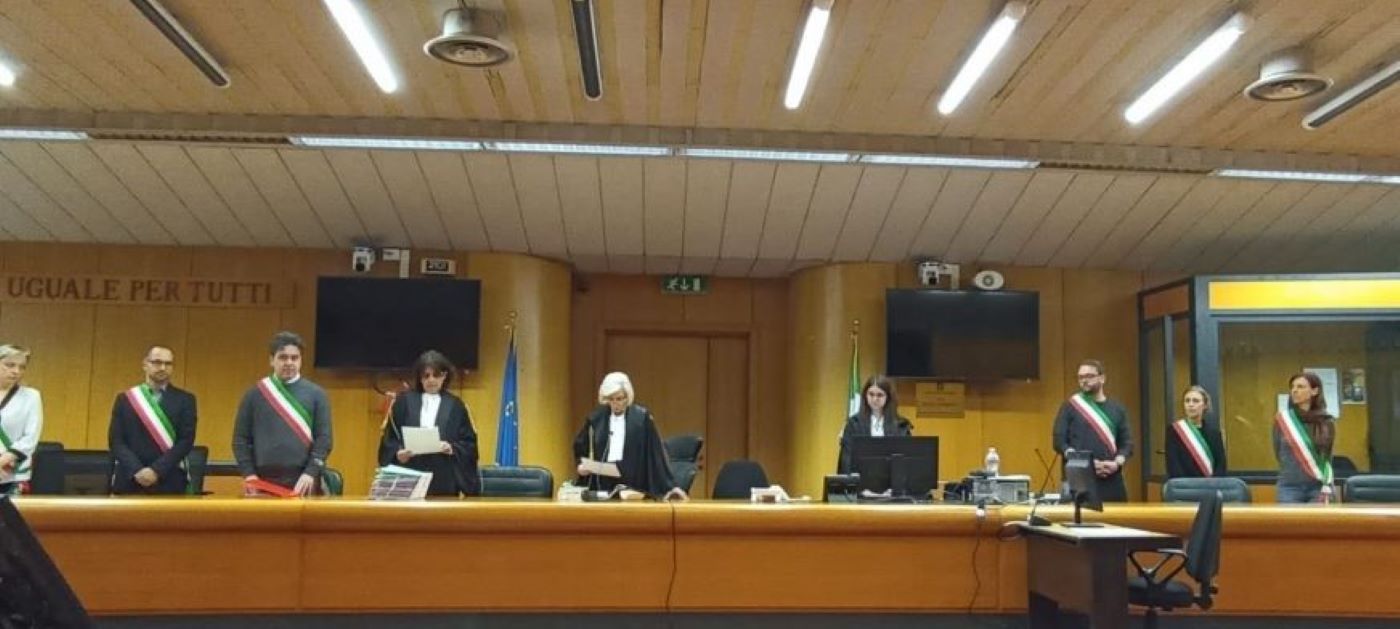
La Corte d’Assise d’Appello spiega perché, il 17 aprile 2025, ha condannato l’imprenditore svizzero Stephan Schmidheiny a nove anni e mezzo di reclusione per i morti d’amianto del filone casalese del processo Eternit Bis.
Martedì 14 ottobre, sono state depositate le motivazioni che spiegano il verdetto: in seicentoventi pagine si ribadisce che l’imputato è colpevole di omicidio colposo, secondo la riqualificazione del reato (che fa cadere la contestazione di omicidio doloso proposta dalla procura) già attuata dalla Corte d’Assise di primo grado di Novara.
- RIASSUNTO PROCESSO DI PRIMO GRADO
Nelle prime poco più di cento pagine, la Corte d’Assise (presieduta da Cristina Domaneschi, affiancata dalla giudice togata Elisabetta Gallino e dai sei giudici popolari, tre uomini e tre donne) riassume la storia del primo grado di giudizio, riportando una sintesi della sentenza pronunciata a Novara il 7 giugno 2023, i motivi di impugnazione del pm e quelli della difesa.
- I NODI DEL PROCESSO D’APPELLO
Seguono centosettanta pagine in cui la Corte torinese illustra gli argomenti salienti che riguardano, principalmente, il cosiddetto «elemento soggettivo» (cioè perché Schmidheiny è ritenuto responsabile di omicidio per colpa e non per dolo) e il «nesso di causalità», nodo spinosissimo articolato in alcuni sottocapitoli, nei quali i giudici si soffermano sulla tesi della «cancerogenesi multistadiale» (cioè come si forma il tumore), sulla rilevanza di tutte le esposizioni all’amianto, sull’anticipazione della malattia e della morte a causa delle esposizioni successive, oltre che sulla durata della cosiddetta fase «preclinica», cioè gli anni che precedono la diagnosi di mesotelioma, quando il cancro è già insediato, non ancora visibile, ma ormai irreversibile.
Interessante riportare qui il paragrafo delle «conclusioni» esposte dalla Corte d’Assise d’Appello su queste tematiche giuridico-scientifiche particolarmente delicate e complesse che sicuramente si troveranno a passare il vaglio della Cassazione, in un successivo grado di giudizio, dopo la prevedibile impugnazione.
- CHE COSA DICE LA SCIENZA
Più volte abbiamo scritto che in questo processo (come in altri incentrati su inquinamenti e disastri ambientali) la scienza entra in tribunale con un ruolo preponderante e dirimente.
E, allora, come si regola l’Assise di fronte alle varie tesi scientifiche proposte e dibattute? La Corte di Torino afferma di ritenere valide come «leggi di copertura» (cioè che collegano un caso e una norma) quelle fondate «sulle teorie scientifiche maggiormente accreditate dagli studiosi di settore» che, nell’articolato processo Eternit Bis (sia in primo che in secondo grado), sono state lungamente illustrate e sviscerate.
Ricordiamo brevemente che cosa significa «nesso causale»: in questa vicenda, significa accertare che ogni vittima si è ammalata di mesotelioma per aver inalato fibre d’amianto nel periodo in cui l’imputato era l’effettivo responsabile dell’Eternit (il cosiddetto «periodo di garanzia»), cioè nel decennio tra il 1976 e il 1986.
Che cosa afferma, dunque, la Corte? Che «il mesotelioma è malattia cagionata da esposizione all’amianto; che il processo di cancerogenesi (cioè come una cellula normale si trasforma in cellula tumorale) è «multistadiale» (cioè avviene in più fasi temporali diverse e tutte concorrono a sviluppare la malattia, non soltanto la prima esposizione alla fibra) e che, quindi, nel causare il mesotelioma, contano sia la durata che l’intensità dell’esposizione subita, fino a quando si completa la cosiddetta fase di induzione.
L’induzione va dall’inizio dell’esposizione all’amianto fino all’insorgenza della patologia, cioè al momento in cui la cellula capostipite del tumore, per effetto delle alterazioni prodotte dalla fibra respirata, si trasforma da benigna in maligna. Segue la fase preclinica che va dall’insorgenza del nodo tumorale asintomatico fino alla diagnosi: è il lasso di tempo in cui il tumore, già insediato ma ancora invisibile (e, quindi, non ancora diagnosticabile), si sviluppa fino ad assumere una certa consistenza e a produrre i primi sintomi.
Quando nell’organismo si è completata la fase di induzione, le successive esposizioni alla fibra non sono più rilevanti, perché la malattia (nella fase preclinica), anche se silente, non ancora visibile e diagnosticabile, è però irreversibile. La Corte accoglie la tesi, che gode del consenso della comunità scientifica, secondo cui il periodo successivo all’induzione dura dieci anni. E, infine, a un aumento dell’esposizione corrisponde l’accelerazione della malattia e, di conseguenza, l’anticipazione della morte.
- I SINGOLI CASI
Nelle successive trecentoventi pagine delle motivazioni, i giudici torinesi analizzano, a uno a uno, i casi singoli, indicando i motivi per cui per alcuni (29 in più rispetto ai 46 già individuati dalla Corte di Novara) Schmidheiny è stato assolto, escludendo o non potendo provare una responsabilità diretta tra la loro morte e la condotta dell’imputato.
Proprio per gli aumentati casi di assoluzione, oltre che per l’incremento di casi per i quali, tra il verdetto di primo e di secondo grado, è maturata la prescrizione, la Corte d’Assise ha rideterminato la pena da dodici anni e mezzo a nove anni e mezzo.
- LE PARTI CIVILI
Le ultime venti pagine sono dedicate alle provvisionali e alle spese processuali (riconteggiate rispetto alla Corte di primo grado), riconosciute a famigliari, enti e associazioni costituiti parte civile nel processo penale a carico di Schmidheiny.
Nei prossimi giorni, seguirà, su questo blog, un’analisi più articolata sui temi cruciali della sentenza che la Corte d’Assise d’Appello ha argomentato nelle motivazioni appena depositate.
https://www.silmos.it/schmidheiny-colpevole-inflitti-12-anni-per-plurimi-omicidi-colposi/
TRANSLATION BY VICTORIA FRANZINETTI
ETERNIT BIS – Court of Appeal of Assizes: ‘This is why Schmidheiny is guilty.’ The reasons underlying the ruling by Silvana Mossano
The Court of Appeal published the motivations explaining why the businessman Stephan Schmidheiny had been sentenced to nine and a half years in prison for the asbestos deaths in the Casale plant of the Eternit Bis trial on 17 April 2025.
On Tuesday 14 October, the motivations of the verdict were filed: 620 pages, reiterate the defendant is guilty of manslaughter, for the offence which reduced the charge of murder requested by the prosecution) already implemented by the Court of Assizes of first instance in Novara.
- SUMMARY OF THE FIRST INSTANCE TRIAL
In the first hundred or so pages, the Court of Appeal of Assizes (Dr Cristina Domaneschi, Chief Justice with judge Elisabetta Gallino and six lay judges members of the Jury), three men and three women summarises the history of the trial in the Court of Assizes , providing a summary of the sentence handed down in Novara on 7 June 2023, and the grounds for appeal by the public prosecutor and those of the defence.
- THE APPEAL
This is followed by one hundred and seventy pages in which the Turin Court illustrates the salient arguments concerning, mainly, the so-called “subjective element” (i.e. why Schmidheiny is considered responsible for manslaughter and not murder) and the “causal link”, a very thorny issue divided into several sub-chapters, in which the judges focus on the theory of “multistage carcinogenesis” (i.e. how the tumour forms), the relevance of all asbestos exposures, the anticipation of illness and death due to subsequent exposures, as well as the duration of the so-called “preclinical” phase, i.e. the years preceding the diagnosis of mesothelioma, when the cancer is already established, not yet visible, but now irreversible.
It is interesting to quote here the paragraph of the “conclusions” presented by the Court of Appeal on these particularly delicate and complex legal-scientific issues, which will certainly be examined by the Court of Cassation in a later stage of the proceedings, after the expected appeal.
- WHAT SCIENCE SAYS
As I have written several times that in this trial (as in others focusing on pollution and environmental disasters) science enters the courtroom with a strong and decisive role.
So, how can the Court of Assizes decide in the face of the various scientific theories proposed and debated? The Court of Turin states that it considers valid as enabling (i.e. linking a case and a rule) those based “on the scientific theories most widely accepted by scholars in the field”, which, in the complex Eternit Bis trial (both in the lower and higher), have been extensively illustrated and examined.
Let us briefly recall what “causal link” means: in this case, it means establishing that each victim contracted mesothelioma by inhaling asbestos fibres during the period when the defendant was effectively responsible for Eternit (the so-called “guarantee period”), i.e. in the decade between 1976 and 1986.
What does the Court say? That “mesothelioma is a disease caused by exposure to asbestos; that the process of carcinogenesis (i.e. how a normal cell is transformed into a cancer cell) is ‘multistage” (i.e. it occurs in several different stages, all of which contribute to the development of the disease, not just the first exposure to the fibre) and that, therefore, in causing mesothelioma, both the duration and intensity of the exposure suffered are important, until the so-called induction phase is complete.
The induction phase lasts from the beginning of exposure to asbestos until the onset of the disease, i.e. the moment when the tumour’s progenitor cell, as a result of the alterations produced by the inhaled fibre, transforms from benign to malignant. This is followed by the preclinical phase, which runs from the onset of the asymptomatic tumour node to diagnosis: this is the period of time in which the tumour, already established but still invisible (and therefore not yet diagnosable), develops to a certain size and produces the first symptoms.
Once the induction phase is complete in the body, subsequent exposure to the fibre is no longer relevant because the disease (in the preclinical phase), although silent, not yet visible and undiagnosable, is irreversible. The Court accepts the thesis, which enjoys the consensus of the scientific community, that the period following induction lasts ten years. Finally, an increase in exposure corresponds to an acceleration of the disease and, consequently, an earlier death.
- INDIVIDUAL CASES
In the following 320 pages of the judgment, the Turin judges analyse the individual cases one by one, indicating the reasons why Schmidheiny was acquitted in some cases (29 more than the 46 already identified by the Court of Novara), excluding or being unable to prove a direct link between their deaths and the conduct of the defendant.
Precisely because of the increased number of acquittals, as well as the increase in cases for which the statute of limitations had expired between the first and second instance verdicts, the Court of Assizes redetermined the sentence from twelve and a half years to nine and a half years.
- THE CIVIL PARTIES
The last twenty pages are devoted to interim compensation and legal costs (recalculated with respect to the Court of first instance), awarded to family members, entities and associations that were civil parties in the criminal proceedings against Schmidheiny.
In the coming days, this blog will publish a more detailed analysis of the crucial issues in the ruling that the Court of Assizes of Appeal has argued in its recently filed grounds.
https://www.silmos.it/schmidheiny-colpevole-inflitti-12-anni-per-plurimi-omicidi-colposi/
Trovo giusto che i responsabili , rispondano per le proprie azioni.
Apprezzo molto l’impegno infaticabile di chi s’impegna tenacemente per ottenere giustizia ed un miglioramento della vita delle persone.