

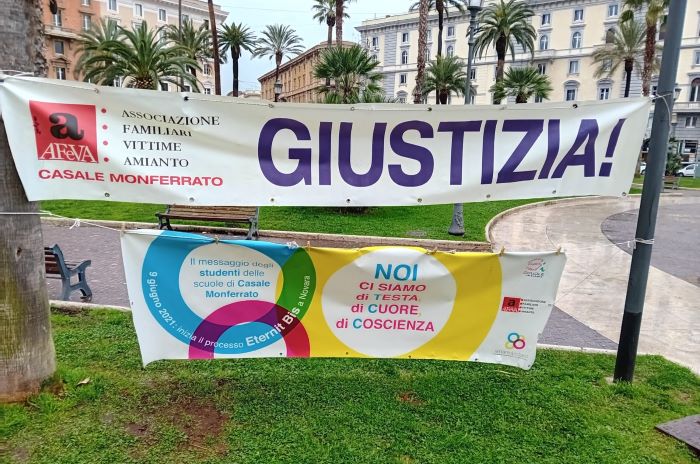
È evidente: l’obbiettivo di Stephan Schmidheiny non è quello di dimostrare la propria innocenza rispetto alle diverse decine di persone della cui morte da amianto deve rispondere nel processo Eternit Bis.
Il suo scopo è quello di scappare, ossia di individuare tutte le vie di fuga possibili per aggirare con qualsiasi mezzo una condanna, prima ancora che battersi per scongiurarla.
È esattamente il contrario del noto aforisma giuridico: «Difendersi nel processo e non dal processo». Qui, invece, si ribalta: Schmidheiny ha dimostrato di mettere in atto ogni strategia per difendersi dal processo e non nel processo.
La sequenza costante di eccezioni e di rilievi di presunte nullità, reiterate e riproposte anche quando già hanno ricevuto risposte, chiarimenti, accoglienza o respingimento, sembra delineare pienamente questa pianificazione.
Adesso la difesa ha sollevato la nullità per la mancata traduzione in lingua tedesca della sentenza della Corte d’Assise d’Appello di Torino.
Scriviamo «adesso», ma non è un tema nuovo. Anche nel processo di primo grado in Corte d’Assise a Novara, la traduzione degli atti, che pure c’era, fu oggetto di minuziosi rilievi e contestazioni da parte della difesa che la definì «errata, incompleta o inidonea».
LA TRADUZIONE
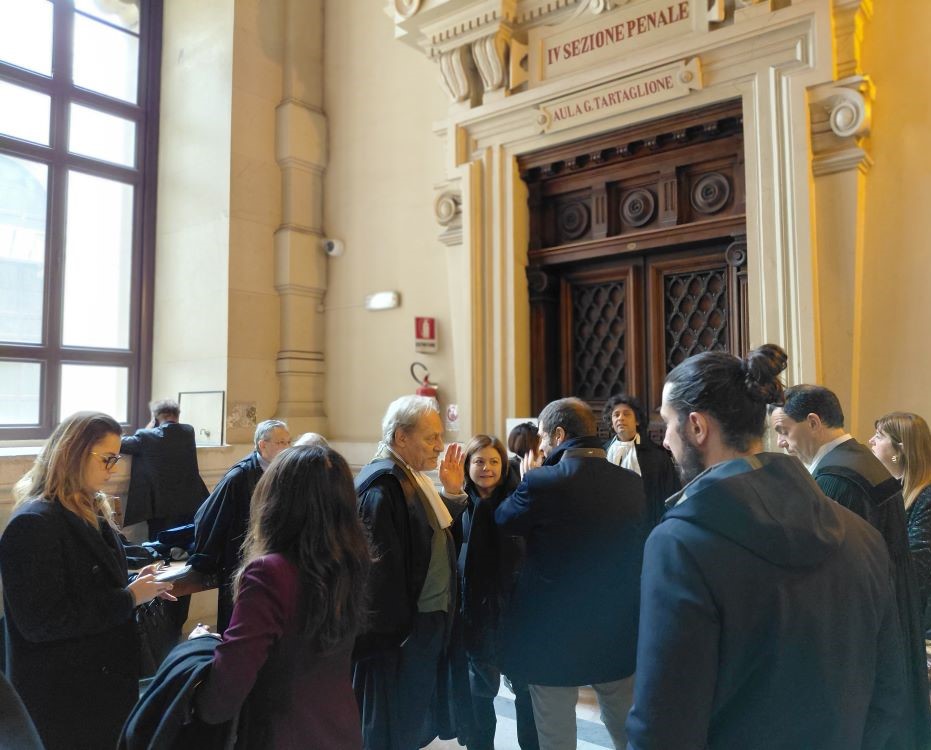
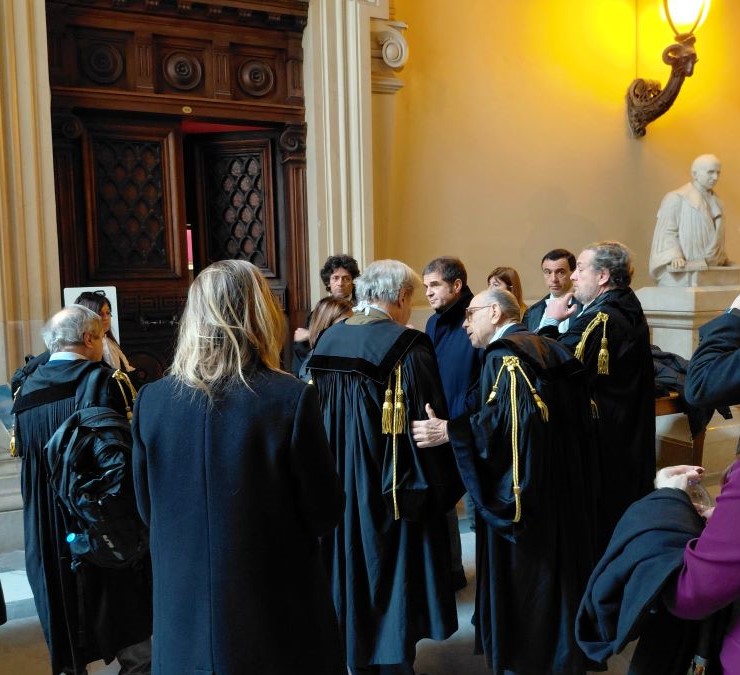
La Corte di Cassazione, all’udienza di mercoledì 11 febbraio 2026, ha ritenuto fondata la doglianza della difesa e ha annullato la sentenza di secondo grado, rimandandola a Torino affinché venga disposta la traduzione nella lingua madre dell’imputato svizzero tedesco.
La decisione è presa. Non ci sarebbe più niente da dire, però…
Però.
LE DOMANDE
Però qualche riflessione forse merita farla, visto che il tema ha provocato nell’opinione pubblica reazioni sdegnate o deluse.
Domanda: senza quella traduzione, l’imputato può comprendere (anzi, ha potuto comprendere) per quale motivo è stato condannato a 9 anni e mezzo, in ordine al reato di omicidio colposo aggravato, per la morte di 91 persone, uccise dal mesotelioma provocato dall’amianto?
Sì, molto ragionevolmente sì, lo ha compreso, altrimenti i suoi difensori non avrebbero potuto depositare 530 pagine di ricorso in Cassazione. A sua insaputa?
Quel ricorso, corposo e ampiamente articolato, non è certamente frettoloso ed è difficile credere che l’imputato non sia minuziosamente consapevole di quanto c’è scritto, tanto più che ha sempre tenuto un comportamento interessato e pervasivo, tanto nell’attività imprenditoriale quanto nei processi e, diciamo così, relative appendici.
Altra domanda: in precedenza, gli atti di avviso di chiusura indagini, di citazione a giudizio e sentenze, erano stati tradotti?
Sì (con qualche dubbio che sia stata tradotta la sentenza di secondo grado del filone Eternit Bis, riguardante le morti di Cavagnolo).
Di certo, nell’ordinanza del 19 luglio 2021, emessa dalla Corte d’Assise di Novara, (primo grado di giudizio dell’Eternit Bis), il presidente Gianfranco Pezone diede per scontato, «per come ammesso pacificamente dalle parti, [che] l’imputato – di origine svizzera – non parla né comprende sufficientemente la lingua italiana […]»; inoltre «va preliminarmente evidenziato che sia il PM che il GUP hanno provveduto a far tradurre i predetti atti nella lingua-madre tedesca conosciuta dall’imputato, benché costui abbia eletto domicilio presso lo studio del difensore di fiducia». Da più di sedici anni i difensori di fiducia di Stephan Schmidheiny sono due: gli avvocati Astolfo Di Amato e Guido Carlo Alleva, italiani.
IL DIRITTO DI MOHAMED
Difensori che, nei giorni scorsi in Cassazione, hanno insistito sulla nullità della sentenza di secondo grado per mancata traduzione. In particolare, è stato citato il pronunciamento delle Sezioni Unite del 29 maggio 2025, che ribadisce il diritto alla traduzione, peraltro già in precedenza sancito.
Un indagato o un imputato deve essere messo, giustamente, nelle condizioni di comprendere di che cosa è accusato per potersi difendere e deve poterlo fare a partire dalla comprensione della lingua (non necessariamente la lingua madre, come ha rimarcato l’avvocata di parte civile Esther Gatti, ma una lingua che lui capisca).
La sentenza delle Sezioni Unite, richiamata, riguardava l’imputato Mohamed N.
Ora, va da sé che il diritto riconosciuto a Mohamed (che deve capire se rischia, ad esempio, di essere espulso… e non ha i mezzi per pagarsi un interprete!) vale anche per Stephan Schmidheiny, «cittadino extracomunitario svizzero tedesco – ha puntualizzato il difensore Alleva – che non parla e non conosce l’italiano».
È così? Non sa l’italiano?
PERCHE’ NON E’ STATA TRADOTTA?
La domanda, diventata in questi giorni un tormentone, è questa: perché la Corte d’Assise d’Appello di Torino – che ha scritto 630 pagine di sentenza di grande spessore giuridico – non l’ha fatta tradurre?
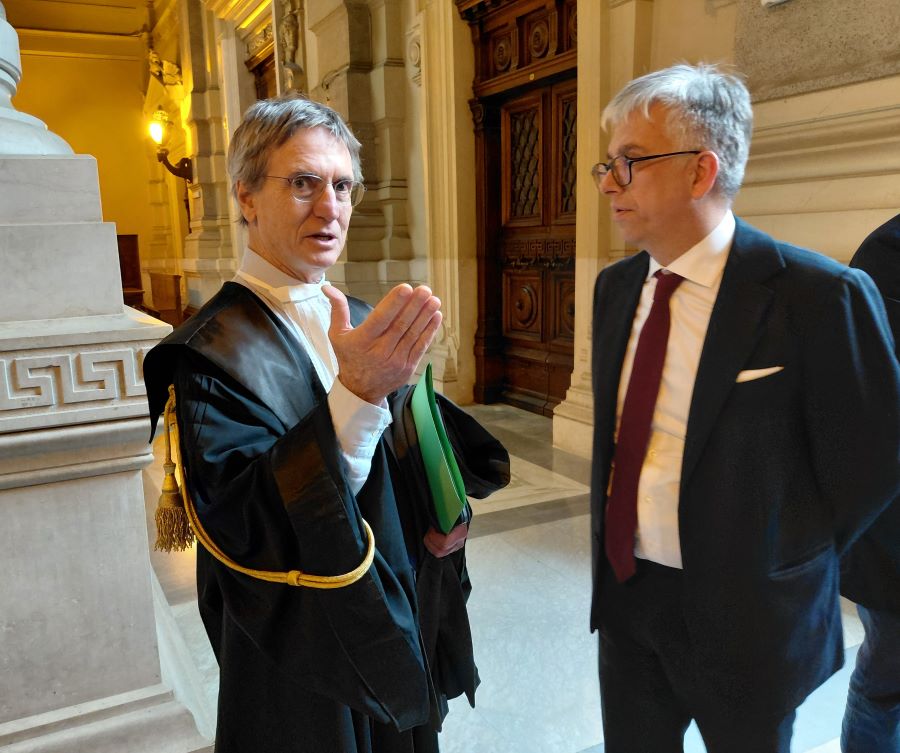
Una dimenticanza? Si direbbe di no, tanto è vero che ne ha spiegato il motivo, richiamato integralmente, in una memoria scritta, dal sostituto procuratore generale della Cassazione, Paolo Andrea Maria Fiore. Testualmente, riferito all’imputato: «Si sarebbe trattato, invero, di un imprenditore che, fin dai primi anni Settanta, è stato a capo di una azienda con radicate e diffuse articolazioni operative, dislocate in tutto il territorio nazionale (Cavagnolo, Casale Monferrato, Bagnoli, Rubiera). Il prevenuto si sarebbe sempre interfacciato con i responsabili, di lingua italiana, posti a capo di tali sedi, riprova ne sarebbe il carteggio intercorso con l’amministratore delegato Luigi Giannitrapani, con il quale Schmidheiny avrebbe più volte interloquito personalmente e informalmente. A ciò [si aggiunge] la disponibilità, da parte della famiglia dell’imputato, di una casa nell’isola d’Elba, ove il prevenuto si sarebbe recato personalmente, oltre alla circostanza per cui il verbale del convegno di Neuss del 1976 è stato acquisito dal Pubblico Ministero già in lingua italiana nell’originale».
I DATI NUOVI SULLA LINGUA
L’avvocato Alleva, però, per la prima volta ha fatto emergere che, invece, Schmidheiny e Giannitrapani non si scrivevano in italiano nella riservatissima corrispondenza (che veniva recapitata a un anonimo ufficio postale di Genova anziché all’ufficio dirigenziale dell’amministratore delegato in azienda), bensì in francese che, pure, non era la lingua né dell’uno né dell’altro.
Quanto al convegno nella città tedesca di Neuss (giugno 1976), il difensore ipotizza che, essendosi trattato di una riunione internazionale di dirigenti convocata da Schmidheiny, la lingua usata non fosse l’italiano e che in italiano fossero poi stati tradotti successivamente i verbali.
Altre occasioni per Schmidheiny di esprimersi? Non sappiamo, ad esempio, in che lingua interloquisse con Guido Bellodi, noto professionista della comunicazione milanese cui, per anni, l’imputato affidò il compito di curargli l’immagine, attraverso molte azioni che tacitassero o mistificassero qualsiasi suo collegamento con la pericolosità dell’amianto.
Di certo, in ogni udienza processuale, i documenti mostrati sono sempre stati in italiano, come furono acquisiti a suo tempo dalla procura.
L’avvocato Alleva, ora, parla di lettere in francese e di verbali scritti, in prima battuta, in un’altra non precisata lingua straniera. Non dubitiamo che ora siano emersi e siano stati recuperati gli originali di questi documenti, che sarebbe bene condividere, affinché non restino, come lui spesso dice, «elementi suggestivi».
Preso atto di tutto questo, possiamo pensare, e credere, che l’imputato Stephan Schmidheiny abbia avallato il deposito di circa 530 pagine di ricorso in Cassazione, fitte di osservazioni, di eccezioni, di argomentazioni giuridiche e scientifiche, senza aver capito di che cosa i suoi difensori stavano parlando?
IL COMPITO DEI DIFENSORI
L’avvocato Di Amato ha però rilevato che la vicenda processuale è così complessa e articolata che, per capirla, deve poter disporre della traduzione nella propria lingua. Tesi che l’avvocato di parte civile, Maurizio Riverditi, ha stigmatizzato dicendo: «Oltre ai documenti prodotti in aula, ci sono circostanze che danno prova che Schmidheiny capisca. In una intervista di alcuni anni fa, affermò di odiare gli italiani come conseguenza delle imputazioni che gli vengono mosse. Quindi, il motivo che lo spinge a questo sentimento lo conosce! In ogni caso – ha ricordato Riverditi – qualunque imputato, pur italiano e dotato anche di elevato grado di istruzione, può non comprendere il significato tecnico di una sentenza che, appunto, gli viene spiegato dagli avvocati». Già nella sentenza di primo grado, la Corte d’Assise di Novara evidenziava proprio che «nel ruolo del difensore di fiducia c’è anche un puntuale compito informativo al proprio assistito», soprattutto sulle questioni più tecniche. Difensori di fiducia qui ce ne sono ben due.
Comunque, tutto questo ormai è superato, si è già oltre.
La Suprema Corte ha riconosciuto che a Schmidheiny spetti la traduzione in tedesco eseguita dallo Stato italiano (con un costo tra 15 e 20 mila euro), quand’anche ne abbia già disposta una a proprie spese che potrà magari servire a contestare le sfumature linguistiche dell’altra.
Tal è.
Tutto è rappresentato in un contesto lecito, con ruoli ben chiari e distinti.
I PESI DIVERSI DEI RUOLI
Che però, si consenta, hanno pesi diversi da sopportare.
Non c’è sarcasmo – mi si creda sull’onore – nell’affermare che è umanamente e psicologicamente arduo sopportare il peso di un’accusa di omicidio aggravato, per decine di morti, con la prospettiva di una possibile pesante condanna. A quasi ottant’anni di età. È tremendo.
Ma i morti sono i nostri morti. Sono i nostri cari. Siamo potenzialmente noi stessi, ognuno di noi. Ed è umanamente gravoso fare i conti con quelle angosce e quelle assenze.
E allora fa male sentir dire che i nostri morti non si sa bene di che cosa siano morti e, soprattutto, non si sa se siano stati curati bene, perché magari non c’era la prova immunoistochimica.
Fa male vedere che i tempi allungati camminano veloci verso il capolinea della prescrizione che spazza via una vittima dopo l’altra: un nome e cognome che è solo un numero di un elenco che si assottiglia.
Fa male sentir dire che, sì, l’amianto causa il mesotelioma e, tanto più ne respiri, tanto più si accelera la comparsa della malattia, e lo affermano fior di studi epidemiologici condivisi dalla comunità scientifica internazionale, ma che quella «bestiaccia», come la chiamano in molti, non si sa bene perché la si è presa, né dove, né come, né quando (sicuramente, insiste la difesa, al di fuori dei dieci anni in cui l’Eternit fu gestita dall’imputato).
Fa male sentir dire che una persona cara, un amico, o tu stesso ti sei trovato, un brutto giorno, con «quella» diagnosi (ha detto l’avvocata Esther Gatti: «Quando il medico te la consegna, equivale a un certificato di morte»), e, al processo, ti viene pure instillato il dubbio che non sei stato curato per il giusto, perché potresti avere avuto qualunque altra patologia che assomiglia al mesotelioma, ma forse non lo era. Senza la prova immunoistochimica, finisci in un limbo.
NE BIS IN IDEM?
Ma, ora, ancor più male fa l’ipotesi di un proscioglimento totale e definitivo.
L’avvocato Di Amato ha chiesto che venga applicato al caso di Schmidheiny il principio del ne bis in idem (cioè, semplicemente: non si può essere processati due volte per la stessa cosa).
L’imprenditore svizzero era già stato processato per disastro doloso (il Maxiprocesso in cui fu condannato a 18 anni, ma il reato fu poi prescritto in Cassazione) e, successivamente, incriminato per omicidio (l’Eternit Bis, suddiviso in 4 filoni in sedi giudiziarie diverse).
La questione del ne bis in idem era già stata affrontata e superata. Alla difesa non basta.
Il legale ha richiamato una recente sentenza della Corte di Giustizia europea dell’11 settembre 2025 che riguarda una terrorista mandata a processo sia in Spagna che in Francia per i «medesimi fatti».
Quella sentenza è applicabile all’imputato Schmidheiny? Ascolteremo il dibattito, quando verrà rifissata l’udienza in Cassazione, e attenderemo il pronunciamento della Suprema Corte.
Ma fa proprio male sentir chiedere dal difensore di Schmidheiny di «non doversi procedere (nei confronti dell’imputato, ndr) in virtù del principio del ne bis in idem a riguardo di tutte le vittime, e non soltanto di quelle indicate nel processo Eternit Bis».
Proscioglimento totale: vuol dire metterci una pietra sopra per sempre, un monolite gigantesco.
La Romana (storica presidente dell’Afeva, Romana Blasotti Pavesi, che tanti lutti patì per il mesotelioma) direbbe: «Abbiamo fatto tutte queste battaglie, abbiamo sopportato così tanto dolore, per arrivare a questo risultato?».
Anche in questo caso – vedremo, poi, se l’istanza del ne bis in idem sarà accolta o no – si tratta comunque di un altro tentativo di fuga dal processo da parte di Schmidheiny, non di una legittima quanto dignitosa aspirazione a dimostrare – a sé stesso, prima ancora che a un giudice o alle vittime e ai loro famigliari – la propria innocenza rispetto a uno stillicidio così terribile e ingiusto.
«COLPA DEGLI ALTRI»
I difensori ammettono che l’amianto provochi il mesotelioma, ma escludono che la responsabilità dei morti di Casale e dintorni sia di Schmidheiny.
E a chi la attribuiscono, allora? «Caso mai a chi ha gestito l’Eternit prima di lui».
E, magari, anche agli enti che non hanno controllato a sufficienza.
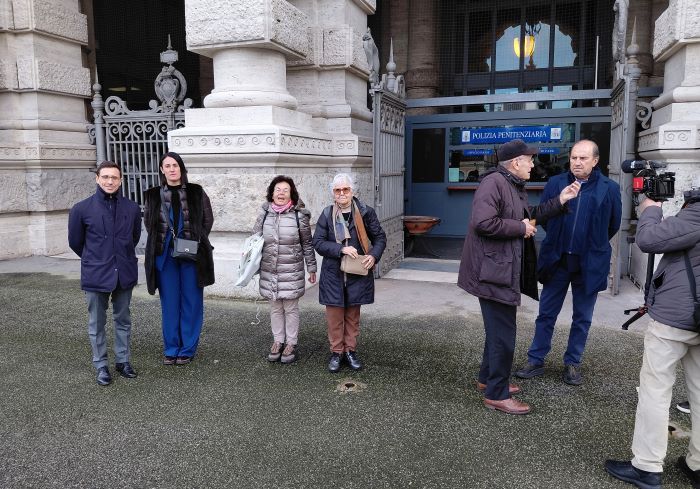
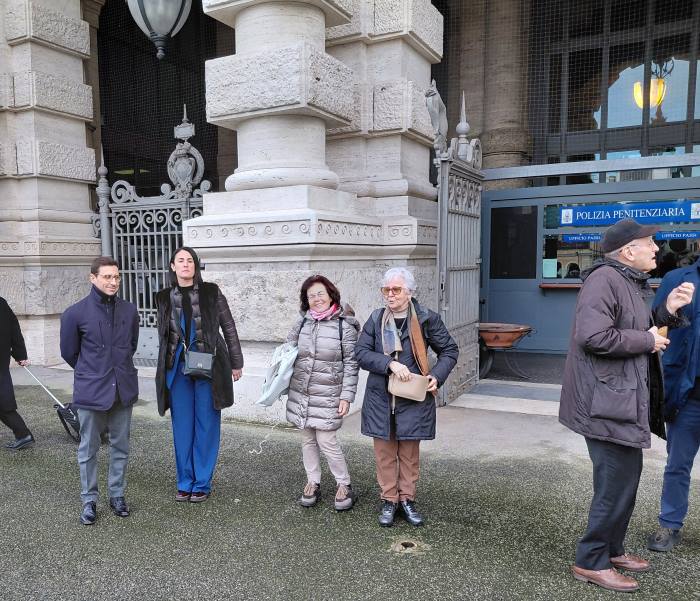
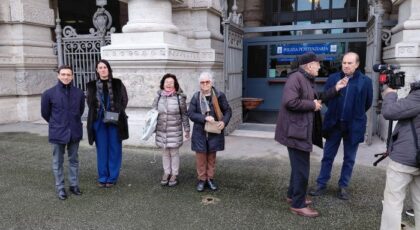
A questo proposito, l’avvocata Esther Gatti, che tutela il Comune di Casale costituito parte civile (sempre vicino alla sua collettività con tutte le amministrazioni che si sono succedute nei decenni; e l’11 febbraio a Roma c’erano il sindaco Emanuele Capra e la capo di gabinetto Cecilia Strozzi), ha reagito: «Ma che si viene a dire? Il Comune di Casale è il solo in Italia ad avere, da anni, un responsabile specifico per il settore amianto. Ed è stato il primo Comune in Italia ad aver vietato l’amianto nel 1987, anni prima della legge che lo bandisse su tutto il territorio nazionale. Ed è veramente strano, poi, che ci venga addebitato un concorso di colpa quando proprio Schmidheiny decise di non rendere nota, né ai lavoratori né agli enti territoriali, la pericolosità dell’amianto che invece lui molto bene conosceva».
E TORNIAMO AL NESSO CAUSALE
Se si sta nel processo, però, il nesso causale resta il nodo vero dell’Eternit Bis.
Se n’è già iniziato a parlare a Roma, mercoledì scorso.
Il pg Fiori, con argomentazioni puntuali, chiare e pacate, ha condiviso e rimarcato la correttezza della sentenza della Corte d’Assise d’Appello. Ha difeso, in particolare, il metodo seguito dai giudici torinesi che hanno adottato scrupolosamente le indicazioni della stessa Cassazione nella scelta degli studi scientifici e delle tesi accreditate e condivise dalla comunità scientifica mondiale, portate al processo da consulenti di cui è acclarata l’autorevolezza internazionale (il pg ha citato, in particolare, gli scienziati Corrado Magnani e Dario Mirabelli).
LA SCIENZA PIU’ AUTOREVOLE
A parere dell’avvocato Alleva, però, quegli studi scientifici non consentono di superare, «oltre ogni ragionevole dubbio», l’applicazione dei risultati epidemiologici al caso singolo. Cioè a dire che non si può accertare quando si siano respirate le fibre di amianto che hanno indotto il mesotelioma manifestato dopo anni di latenza. In realtà, è dimostrato – e il pg Fiori lo ha ribadito – che tutte le fibre respirate fino a 8-10 anni prima della comparsa clinica del mesotelioma non solo contribuiscono alla induzione del mesotelioma, ma ne accelerano la comparsa.
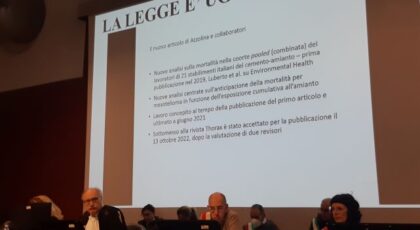
In proposito, l’avvocato Giacomo Mattalia ha richiamato il recente studio di Farahmand et al. (eseguito sui topi) che «supera le obiezioni mosse dalla difesa all’utilizzo dell’epidemiologia. Qui – ha affermato il difensore di parte civile – abbiamo finalmente la prova biologica che mancava e che, tra l’altro, conferma anche la validità dei numerosi studi epidemiologici».
Alleva replica che lo studio Farahmand è stato fatto sui topi e non sugli umani. Bé, se non in un lager, non lo si potrà certamente fare mai sulle persone. Infatti, bisognerebbe trovare delle cavie umane da far ammalare di mesotelioma con una contaminazione forzata di amianto!
Torniamo all’oggi.
Tra il conferimento dell’incarico di traduzione, l’esecuzione del lavoro e la rifissazione di una nuova udienza in Cassazione passerà qualche mese.
I temi più spinosi saranno affrontati allora (salvo eccezioni sulla qualità della traduzione).
GIUSTIZIA E NON VENDETTA
E si dovrà arrivare a una sentenza. Una risposta di giustizia.
I difensori Di Amato e Alleva più volte hanno detto che «il modo per equilibrare una tragedia non è quello di commettere un’ingiustizia, cercando un colpevole a ogni costo e condannando un innocente».
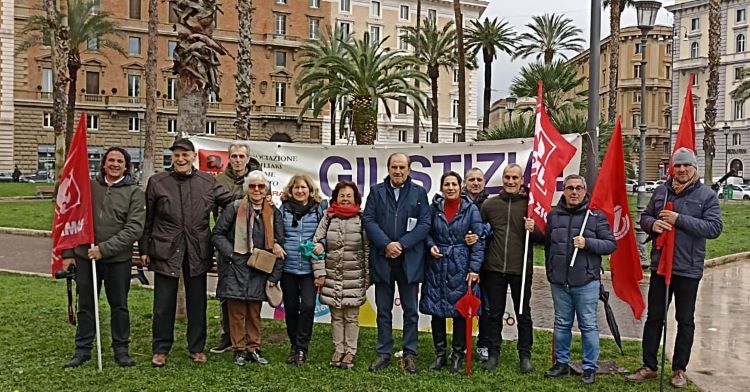
Non si vuole nessuna forzatura. Sui tricolori che sono diventati emblema di questa civile e dignitosa battaglia c’è scritto «Eternit Giustizia».
Ma noi, con pazienza, abbiamo ascoltato molti fatti, molte testimonianze, abbiamo visto molti documenti che conducono a lei, signor Schmidheiny, e lei non si è mai presentato a smentirli.
Lei che, fin da allora, sapeva tutto quel che c’era da sapere sull’amianto (ed era già molto) e ha imposto di tacere per non spaventare la gente e compromettere la produzione, lei che ha operato per mistificare, lei che ha cercato di rifarsi un’immagine green, anche con laurea honoris causa a Yale, senza aver pensato di riparare, prima, il disastro che ha mollato a Casale nel 1986.
In tutti questi anni, non ha mai pensato – ora lo abbiamo capito bene – di presentarsi a dire – in tedesco o in francese o in italiano stentato -: «Mi dispiace, mi dispiace tanto di tutto questo dolore».
Avrebbe anche potuto aggiungere che, a quell’epoca, non era consapevole che l’uso di amianto avrebbe causato questa strage e che era convinto lo si potesse «lavorare in sicurezza». Forse non tutti le avrebbero creduto, pazienza; ma lei avrebbe potuto aggiungere: «Voglio aiutare questa comunità ferita e afflitta, e ancora impaurita, finanziando direttamente e personalmente la ricerca di una cura per guarire».
Ce lo venga a dire oggi, signor Schmidheiny, ce lo venga a dire, in qualunque lingua le viene meglio.
TRANSLATION BY VICTORIA FRANZINETTI
SILVANA MOSSANO
Clearly Stephan Schmidheiny’s goal is not to prove his innocence for the dozens of deaths from asbestos exposure he is accused of in the Eternit Bis trial.
His aim is to escape, that is, to identify all possible escape routes to avoid his sentence by any means necessary, rather than fighting it.
This is exactly the opposite of the well-known legal saying: “Defend yourself in the trial, not from the trial”. Here, however, the opposite is true: Schmidheiny has shown that he is implementing every strategy to defend himself from the trial and not in the trial.
The constant sequence of objections and claims to annul, repeated and re-proposed even when they have already received answers, clarifications, acceptance or rejection, seems to fully outline this plan.
Now, the defence has raised the nullity of the failure to translate into German the judgment of the Court of Assizes of Appeal of Turin.
We write “now”, but this is not a new issue. Even in the first instance trial in the Court of Assizes in Novara, the translation of the documents into German, which did exist, was the subject of meticulous objections and challenges by the defence, which described it as “incorrect, incomplete or unsuitable”.
THE TRANSLATION
At the hearing on Wednesday 11 February 2026, the Court of Cassation upheld the defence’s complaint and overturned the second instance ruling, referring it back to Turin so that it could be translated into the Swiss German defendant’s mother tongue.
The decision has been made. There would be nothing more to say, but…
But.
THE QUESTIONS
However, some reflection is perhaps warranted, given that the issue has provoked indignant or disappointed reactions in public opinion.
Question: without that translation, can the defendant understand (or rather, could he understand) why he was sentenced to nine and a half years for aggravated manslaughter for the deaths of 91 people killed by mesothelioma caused by asbestos?
Yes, quite reasonably, he understood it, otherwise his defence lawyers would not have been able to file a 530-page appeal with the Court of Cassation. Without his knowledge?
That appeal, which is substantial and extensively articulated, is certainly not hasty, and it is difficult to believe that the defendant is not thoroughly aware of what is written in it, especially since he has always behaved in an interested and pervasive manner, both in his business activities and in the trials and, let us say, related appendices.
Another question: had the notices of closure of investigations, summonses and judgments been translated previously?
Yes (with some doubt as to whether the second-instance judgment in the Eternit Bis case concerning the deaths in Cavagnolo had been translated).
Certainly, in the order of 19 July 2021, issued by the Court of Assizes of Novara (first instance of the Eternit Bis case), President Gianfranco Pezone took it for granted, “as clearly admitted by the parties, [that] the defendant – of Swiss origin – does not speak or understand Italian sufficiently […]”; furthermore, “it should be noted first of all that both the public prosecutor and the preliminary hearing judge had the aforementioned documents translated into the defendant’s native language, German, even though he had elected domicile at the office of his defence counsel”. For more than sixteen years, two Italian lawyers, Astolfo Di Amato and Guido Carlo Alleva Stephan have been Schmidheiny’s defence counsel.
MOHAMED’S RIGHT
In recent days, these defence lawyers have insisted before the Court of Cassation that the second instance judgment is null and void due to the lack of translation. They cited the ruling of the Joint Court Circuits dated 29 May 2025, which reaffirms the right to translation, which had already been established previously.
A suspect or defendant must, rightly, be able to understand what they are accused of to defend themselves, and they must be able to do so based on their understanding of the language (not necessarily their mother tongue, as pointed out by civil lawyer Esther Gatti, but a language they understand).
The ruling of the Joint Court Circuits referred to defendant Mohamed N. The right recognised to Mohamed (who must understand whether he risks, for example, being expelled… and does not have the means to pay for an interpreter!) also applies to Stephan Schmidheiny, “a non-EU Swiss German citizen,” pointed out defence lawyer Alleva, “who does not speak or understand Italian”.
Is this the case?
WHY WAS IT NOT TRANSLATED?
The question, which has become a catchphrase in recent days, is this: why did the Turin Court of Appeal – which wrote 630 pages of a judgment of great legal significance – not have it translated?
An oversight? It would seem not, given that the reason was explained in full in a written brief by the Deputy Attorney General of the Court of Cassation, Paolo Andrea Maria Fiore. Quoting verbatim, referring to the defendant: ‘It would have been, in fact, an entrepreneur who, since the early 1970s, had been at the head of a company with deep-rooted and widespread operations throughout the country (Cavagnolo, Casale Monferrato, Bagnoli, Rubiera). The defendant always liaised with the Italian-speaking managers in charge of these offices, as evidenced by the correspondence with the managing director Luigi Giannitrapani, with whom Schmidheiny had repeatedly communicated personally and informally. To this [is added] the availability, on the part of the defendant’s family, of a house on the island of Elba, where the defendant would have gone personally, in addition to the fact that the minutes of the 1976 Neuss conference were acquired by the Public Prosecutor’s Office in Italian in the original’.
NEW DATA ON LANGUAGE
However, Mr Alleva revealed for the first time that Schmidheiny and Giannitrapani did not write to each other in Italian in their highly confidential correspondence (which was delivered to an anonymous post office in Genoa rather than to the CEO’s office at the company), but in French, which was not their mother tongue in both cases.
As for the conference in the German city of Neuss (June 1976), the defence lawyer hypothesises that, since it was an international meeting of executives convened by Schmidheiny, the language used was not Italian and that the minutes were subsequently translated into Italian.
Other occasions for Schmidheiny to express himself? We do not know, for example, in what language he spoke with Guido Bellodi, a well-known Milanese communications professional whom the defendant entrusted with the task of managing his image for years, silencing or mystifying any connection he had with the dangers of asbestos.
Certainly, in every court hearing, the documents shown have always been in Italian, as they were acquired at the time by the public prosecutor’s office.
Lawyer Alleva now speaks of letters in French and minutes written, initially, in another unspecified foreign language. We have no doubt that he has retrieved the originals of these documents to share, so that they do not remain, as he often says, “suggestive elements”.
Taking all this into account, can we think, and believe, that the defendant Stephan Schmidheiny endorsed the filing of approximately 530 pages of appeal to the Court of Cassation, full of observations, exceptions, legal and scientific arguments, without understanding what his defence lawyers were talking about?
THE TASK OF THE DEFENCE
However, Mr Di Amato pointed out that the case is so complex and intricate that, in order to understand it, he must have a translation into his own language. This argument was condemned by the civil party’s lawyer, Maurizio Riverditi, who said: ‘In addition to the documents produced in court, there are circumstances that prove that Schmidheiny understands. In an interview a few years ago, he stated that he hated Italians as a result of the charges brought against him. So he knows the reason behind this feeling! In any case,‘ Riverditi pointed out, ’any defendant, even if Italian and highly educated, may not understand the technical meaning of a sentence that is explained to them by their lawyers.” Already in the first instance judgement, the Court of Assizes of Novara pointed out that “the role of the defence lawyer also includes the specific task of informing their client”, especially on more technical issues. There are two defence lawyers here.
However, all this is now outdated, we have already moved on.
The Supreme Court has recognised that Schmidheiny is entitled to a German translation
provided by the Italian State (at a cost of between €15,000 and €20,000), even though he has already arranged for one at his own expense, which may perhaps serve to contest the linguistic nuances of the other.
Such is the case.
Everything is represented in a lawful context, with clear and distinct roles.
THE DIFFERENT WEIGHTS OF THE ROLES
However, if I may say so, they have different weights to bear.
There is no sarcasm – believe me on my honour – in saying that it is humanly and psychologically difficult to bear the weight of a charge of aggravated murder, for dozens of deaths, with the prospect of a possible heavy sentence. At almost eighty years of age. It is terrible.
But the dead are our dead. They are our loved ones. They are potentially ourselves, each and every one of us. And it is humanly difficult to deal with that anguish and those absences.
And so it hurts to hear that we do not know exactly what our dead died of and, above all, we do not know if they were treated properly, because perhaps there was no immunohistochemical evidence.
It hurts to see that cases are rapidly approaching the end of the statute of limitations, which is sweeping away one victim after another: a name and surname that is just a number on a list that is getting shorter and shorter [in Italy time to statute of limitations continues to be counted even after the trial starts and while the translation is being completed TN].
It hurts to hear that, yes, asbestos causes mesothelioma and that the more you breathe it in, the faster the disease develops, as confirmed by epidemiological studies shared by the international scientific community, but that this “beast”, as many call it, no one knows exactly why they got it, or where, or how, or when (certainly, the defence insists, outside the ten years in which Eternit was managed by the defendant).
It hurts to hear that a loved one, a friend, or you yourself have been given “that” diagnosis on a bad day (as lawyer Esther Gatti said: “When the doctor gives it to you, it’s equivalent to a death certificate”), and at the trial, you are also made to doubt that you were treated correctly, because you could have had any other disease that resembles mesothelioma, but perhaps it wasn’t. Without immunohistochemical testing, you end up in limbo.
NE BIS IN IDEM?
But now, the possibility of a total and definitive acquittal hurts even more.
Lawyer Di Amato has requested that the principle of ne bis in idem (i.e., simply, you cannot be tried twice for the same thing) be applied to Schmidheiny’s case.
The Swiss businessman had already been tried for wilful disaster (at the Maxi-trial, in which he was sentenced to 18 years, but the offence was fell under the statute of limitations according to the Court of Cassation) and subsequently charged with murder (the Eternit Bis, divided into four strands in different courts).
The issue of ne bis in idem had already been addressed and resolved. This is not enough for the defence. The lawyer referred to a recent ruling by the European Court of Justice on 11 September 2025 concerning a terrorist who was tried in both Spain and France for the “same facts”.
Is that ruling applicable to the defendant Schmidheiny? We will listen to the debate when the hearing in the Court of Cassation is rescheduled, and we will await the Supreme Court’s ruling.
But it really hurts to hear Schmidheiny’s defence lawyer ask that “no proceedings should be brought (against the defendant, ed.) by virtue of the ne bis in idem principle with regard to all the victims, and not only those indicated in the Eternit Bis trial”.
Total acquittal: it means putting a giant monolith over it forever.
La Romana (the president of Afeva, Romana Blasotti Pavesi, who suffered so much grief due to mesothelioma) used to say: “We fought all these battles, we endured so much pain, to achieve this result?”.
Even in this case – we will see whether the ne bis in idem request will be accepted or not – this is yet another attempt by Schmidheiny to escape the trial, not a legitimate and dignified aspiration to prove – to himself, even before a judge or the victims and their families – his innocence with regard to such a terrible and unjust ordeal.
“THE FAULT OF OTHERS”
The defence lawyers admit that asbestos causes mesothelioma, but they rule out Schmidheiny’s responsibility for the deaths in Casale and the surrounding area.
So who do they attribute it to? “If anyone, then to those who managed Eternit before him”.
And, perhaps, also to the authorities that did not exercise sufficient control.
In this regard, lawyer Esther Gatti, who represents the Municipality of Casale as a civil party (always close to its community with all the administrations that have succeeded one another over the decades; and on 11 February in Rome, Mayor Emanuele Capra and Chief of Staff Cecilia Strozzi were present), reacted: ‘What are you talking about? The Municipality of Casale is the only one in Italy to have had a specific person in charge of the asbestos sector for years. It was also the first municipality in Italy to ban asbestos in 1987, years before the law that banned it throughout the country. It is truly strange, then, that we are being charged with contributory negligence when it was Schmidheiny himself who decided not to disclose the dangers of asbestos, which he knew very well, to either workers or local authorities‘.
AND BACK TO THE CAUSAL LINK
If we are in the trial, however, the causal link remains the real crux of Eternit Bis.
Discussions on this issue began in Rome last Wednesday.
Prosecutor General Fiori, with precise, clear and calm arguments, agreed with and emphasised the correctness of the Court of Assizes of Appeal’s ruling. In particular, he defended the method followed by the Turin judges, who scrupulously adopted the instructions of the Court of Cassation itself in choosing scientific studies and theses accredited and shared by the global scientific community, brought to the trial by consultants of recognised international authority (the Attorney General cited, in particular, the scientists Prof Corrado Magnani and Dr Dario Mirabelli).
THE MOST AUTHORITATIVE SCIENCE
In Alleva’s opinion, however, those scientific studies do not allow the application of epidemiological results to individual cases to be overcome “beyond reasonable doubt”. In other words, it is not possible to ascertain when the asbestos fibres that induced mesothelioma, which manifested itself after years of latency, were inhaled. In reality, it has been proven – and Attorney General Fiori has reiterated this – that all fibres inhaled up to 8-10 years before the clinical onset of mesothelioma not only contribute to the induction of mesothelioma and also accelerate its onset.
In this regard, lawyer Giacomo Mattalia referred to the recent study by Farahmand et al. (conducted on mice) which “overcomes the objections raised by the defence to the use of epidemiology. Here,” said the civil party’s lawyer, “we finally have the biological evidence that was missing and which, among other things, also confirms the validity of numerous epidemiological studies”.
Alleva replied that the Farahmand study was conducted on mice and not on humans. Well, unless it is in a concentration camp, it will certainly never be possible to do this on people. In fact, it would be necessary to find human guinea pigs to make them sick with mesothelioma through forced asbestos contamination!
Let us return to the present.
A few months will pass between the assignment of the translation, the completion of the work and the rescheduling of a new hearing in the Court of Cassation.
The thorniest issues will then be addressed (barring exceptions regarding the quality of the translation).
JUSTICE, NOT REVENGE
And a verdict will have to be reached. A response of justice.
Defence lawyers Di Amato and Alleva have repeatedly said that “the way to balance a tragedy is not to commit an injustice, seeking a culprit at all costs and condemning an innocent person”.
We do not want any coercion. The Italian flags that have become the emblem of this civil and dignified battle bear the words “Eternit Giustizia” (Eternit Justice).
But we have patiently listened to many facts and testimonies, and we have seen many documents that lead to you, Mr Schmidheiny, and you have never come forward to refute them.
You, who, even then, knew everything there was to know about asbestos (and that was already a lot) and imposed silence so as not to frighten people and compromise production, you who worked to mystify, you who tried to rebuild a green image, even with an honorary degree from Yale, without first thinking of repairing the disaster you left in Casale in 1986.
In all these years, he never thought – we now understand this well – to come forward and say, in German or French or broken Italian, “I’m sorry, I’m so sorry for all this pain”.
He could also have added that, at the time, he was not aware that the use of asbestos would cause this massacre and that he was convinced it could be “worked safely”. Perhaps not everyone would have believed him but never mind; he could have added: “I want to help this wounded and afflicted community, which is still afraid, by directly and personally funding research into a cure”.
Come and tell us today, Mr Schmidheiny, come and tell us, in whatever language you are most comfortable with.
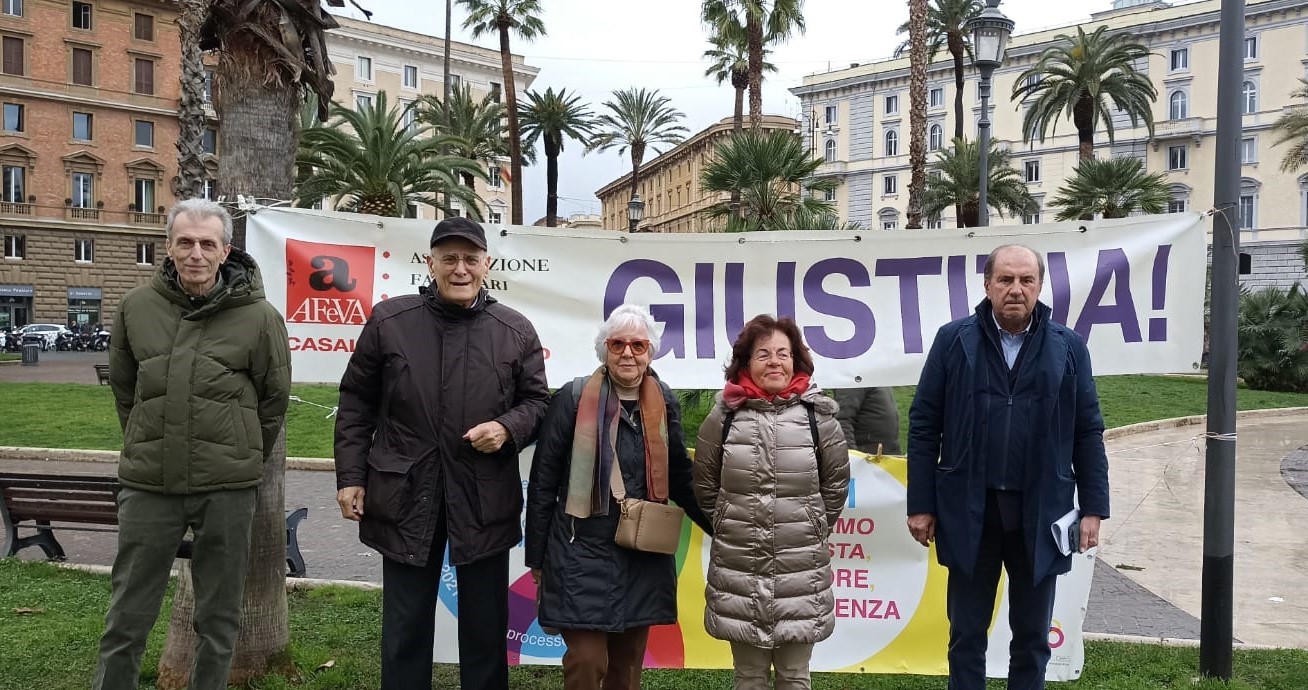

Brava e puntuale!
Grazie Silvana, perfetta nella descrizione e nell’emozione.
Brava Silvana, però la situazione da te descritta lascia l’ amaro in bocca! Spero veramente che Giustizia, alla fine di tutto , sarà fatta.
Grazie mille Silvana…puntuale e precisa cn una analisi che condivido totalmente.
Sintesi perfetta e dolorosa. Coltivare la speranza è sempre più difficile.
Giustizia non Vendetta . Grazie
Grande Silvana!!! Ho sempre più paura che tutto finisca in un mostruoso nulla. Sarebbe terribile, ma forse, possibile.